
The moment the bag opened, the air in the room changed. The scent was less like the seashore than something closer to fresh tea. Nothing had been added. We took a pinch, and a deep savoriness followed the aroma. "This is nothing like the aonori I've eaten before," one of our group said.
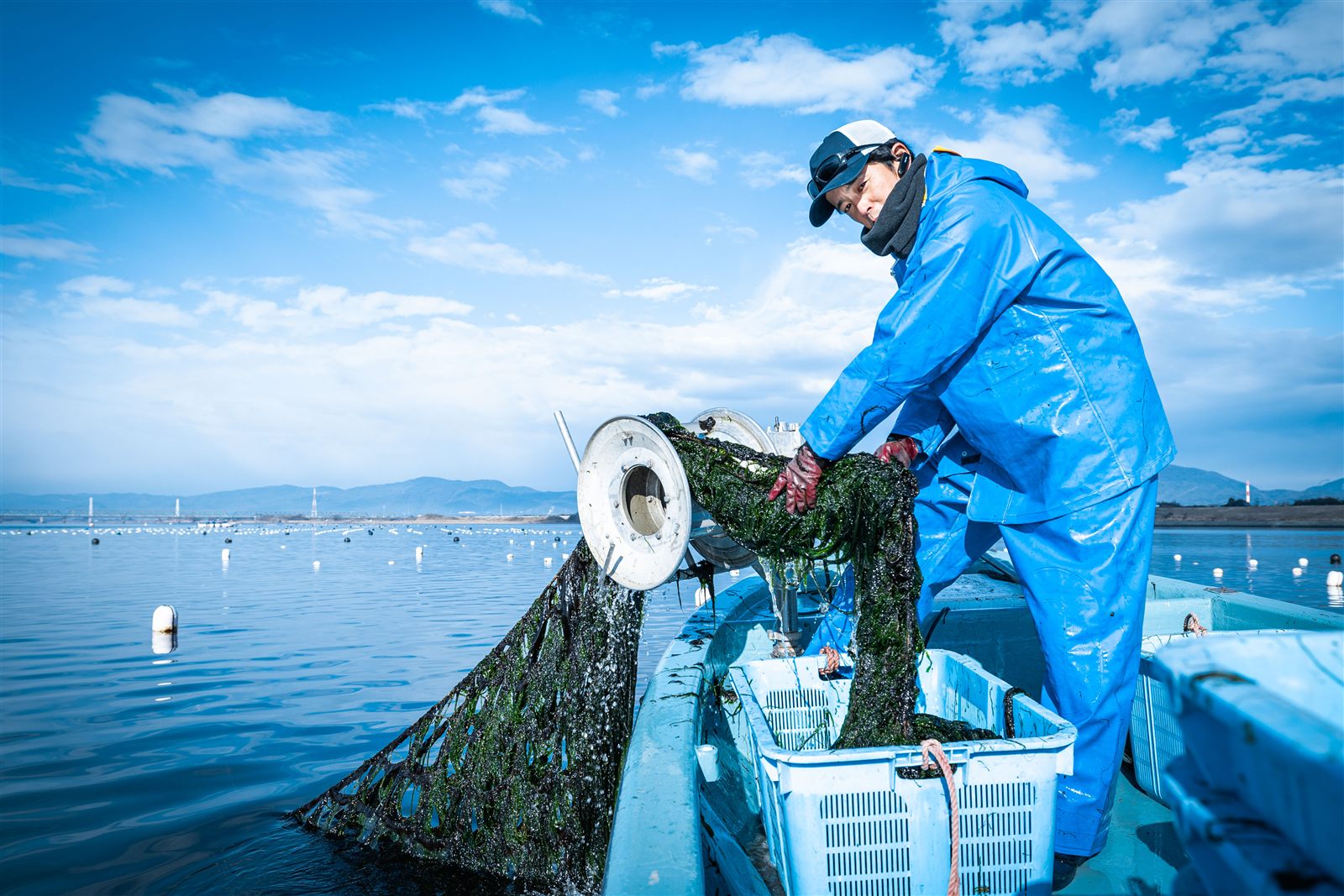
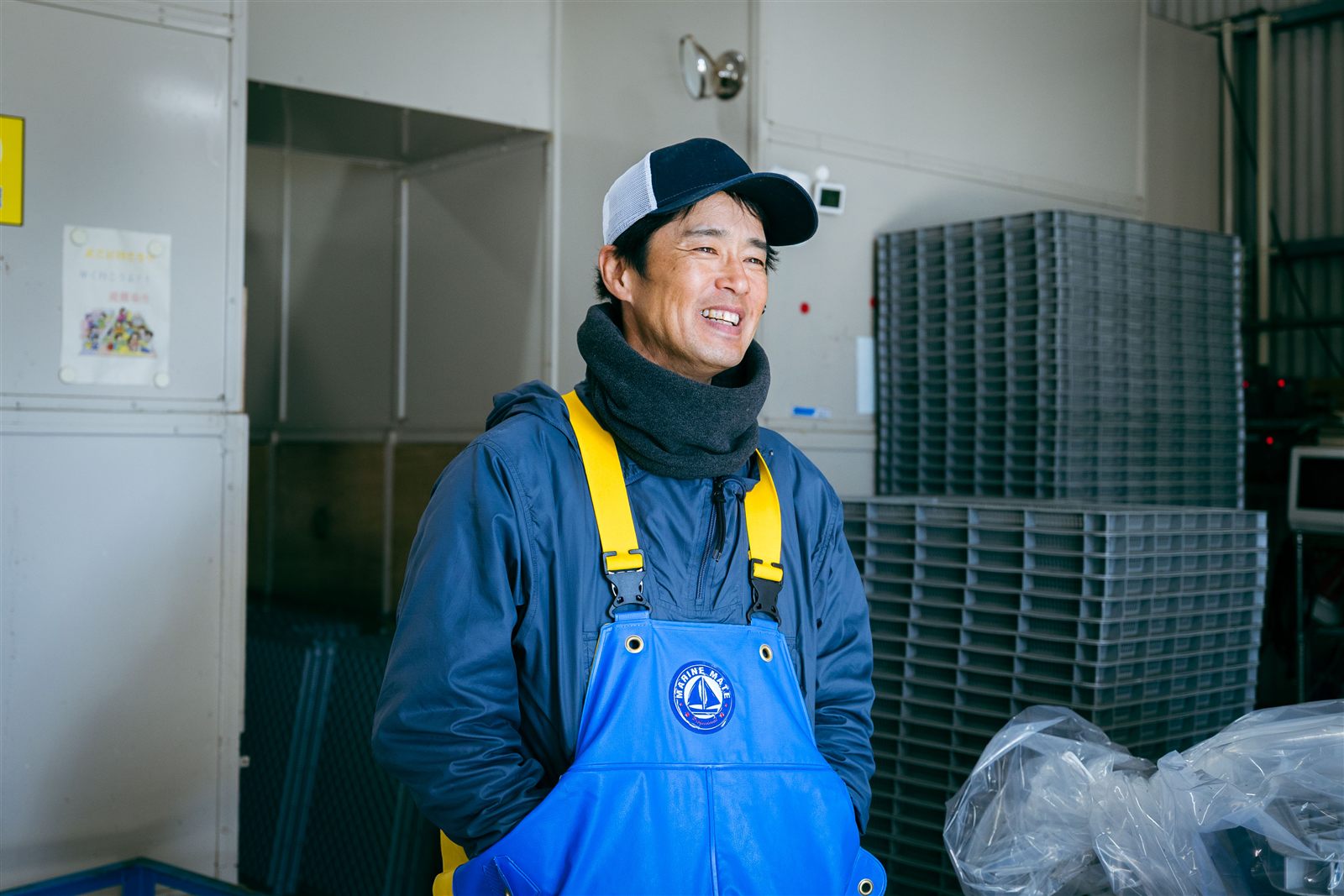
Suji aonori is a slender, thread-like green seaweed. This one is grown by Makoto Doi, head of Tsumugi Inc. in Matsushige, Tokushima. On a January morning in 2026, he took us out on his boat to the Yoshino River.
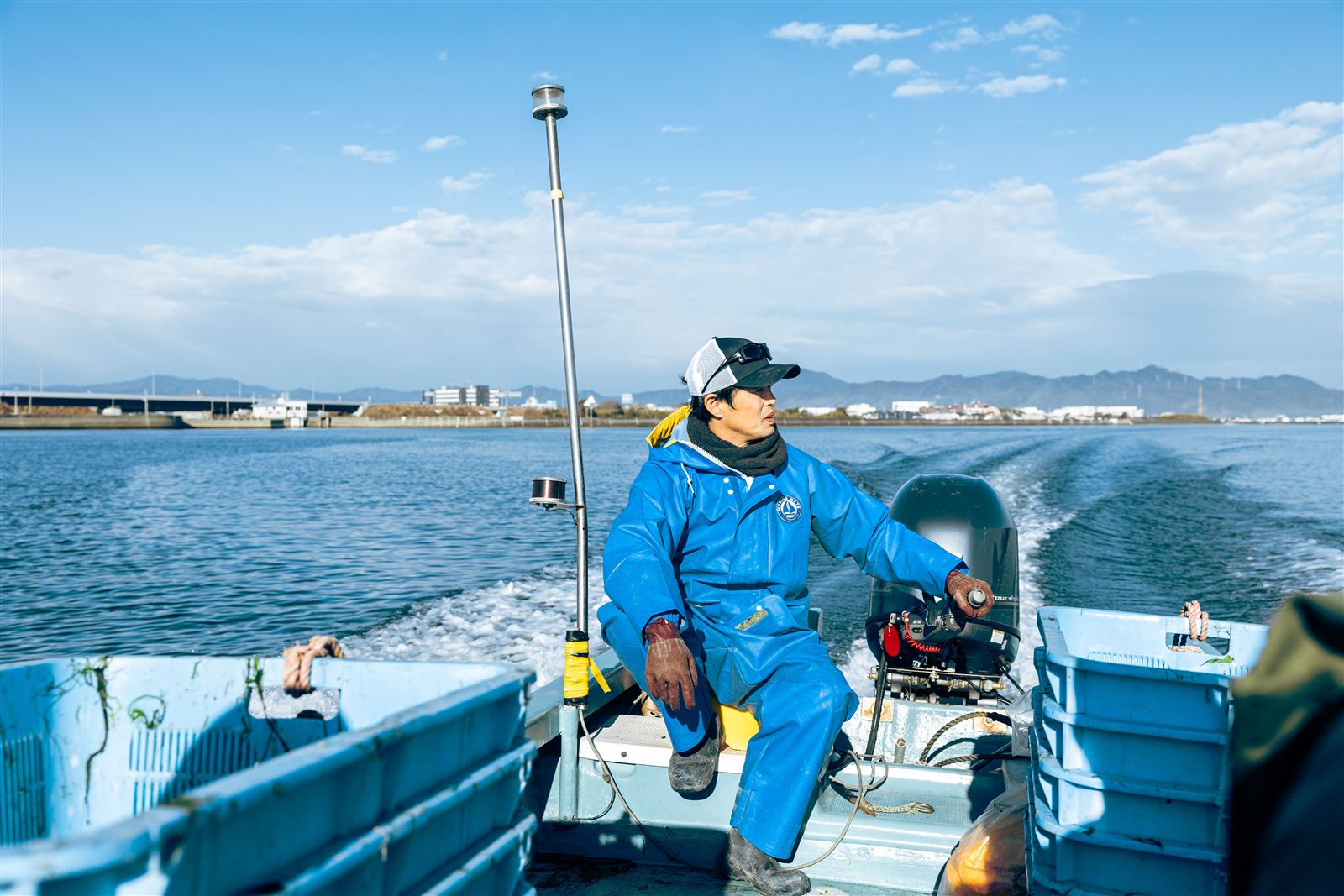
Seeded and raised by the river
Out on the water, marker floats stretched as far as we could see. Beneath them hang the nets.
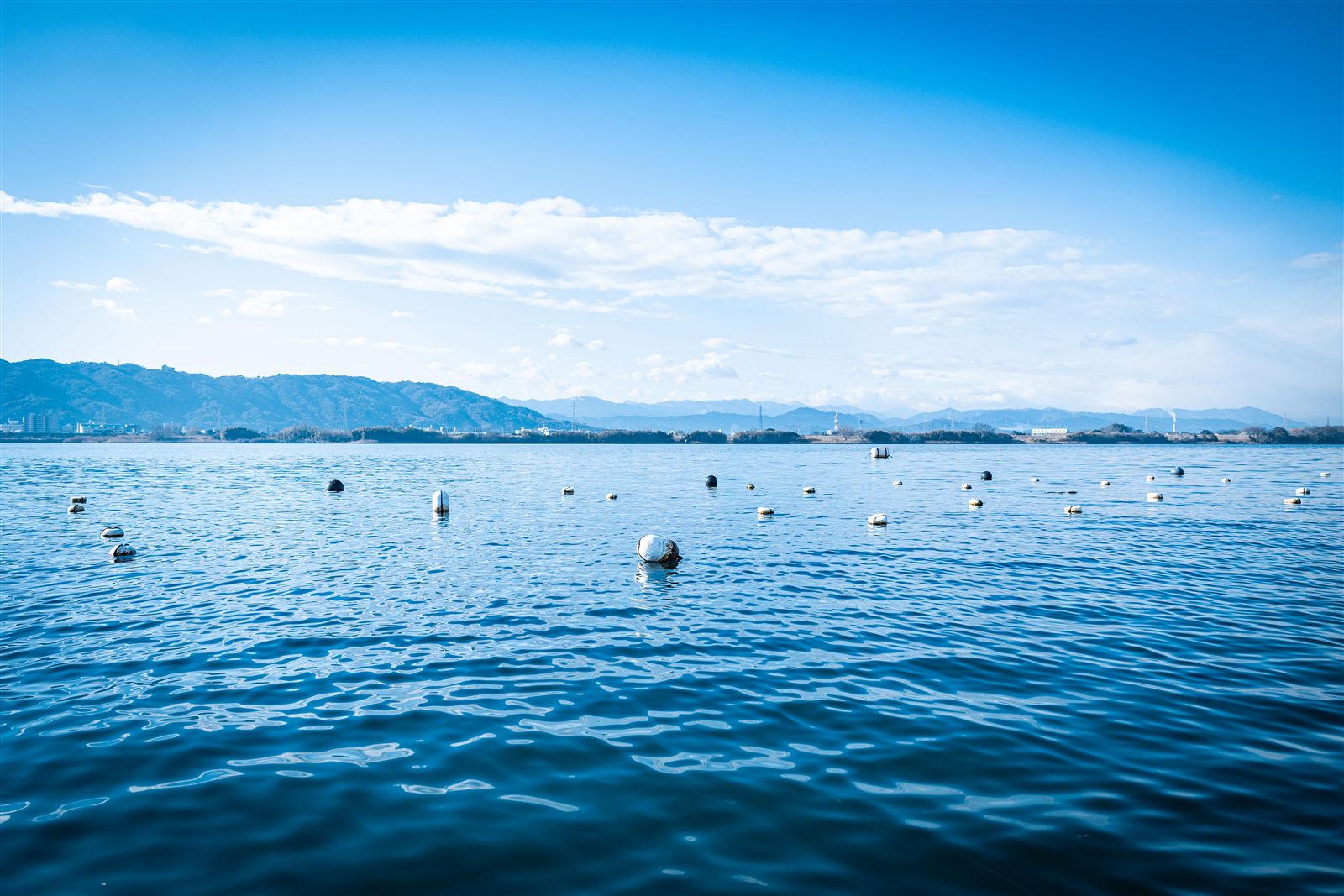
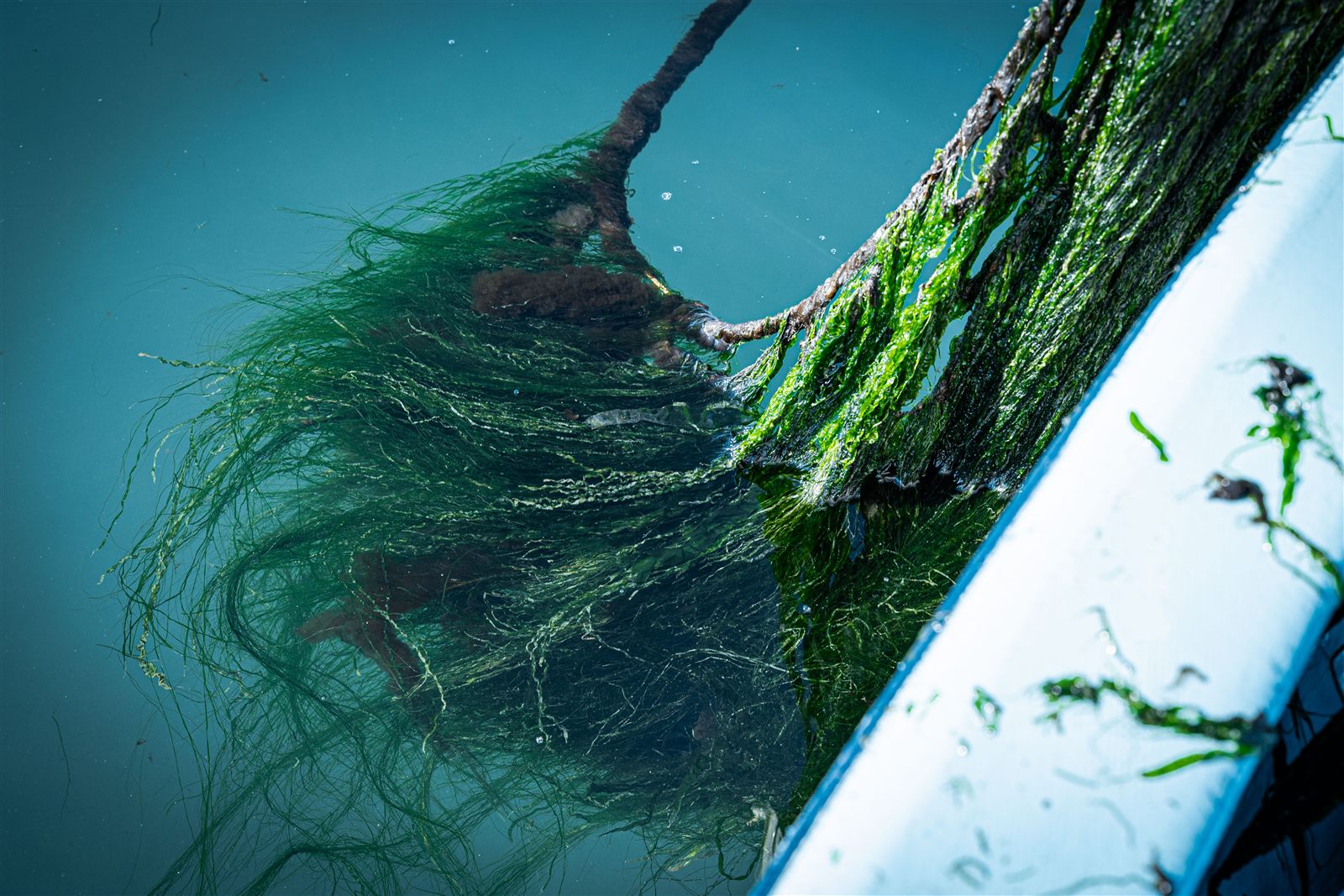
No one plants the seaweed by hand. On a tidal flat just below a railway bridge, Doi sets up pipes and fixes around 24 stacked nets at a set height. As the tide rises and falls, wild spores settle on them. Once shoots appear, the nets move to the growing area, are divided into fours, and are finally spread out one by one.
There is no artificial culture and no added nutrients. The river's own nutrients and the changing season do the growing. The fisher's job is to read the seaweed and prepare the conditions.
Everything rides on two months
The harvest runs only from mid-December through the end of February. The seaweed grows only within a certain range of water temperatures, and by the end of February it starts slipping from the nets, however long it has grown.
It grows again in spring, but the quality falls and tiny shrimp-like creatures arrive in the warming water, so nobody harvests then. A whole year's work comes down to this short season.
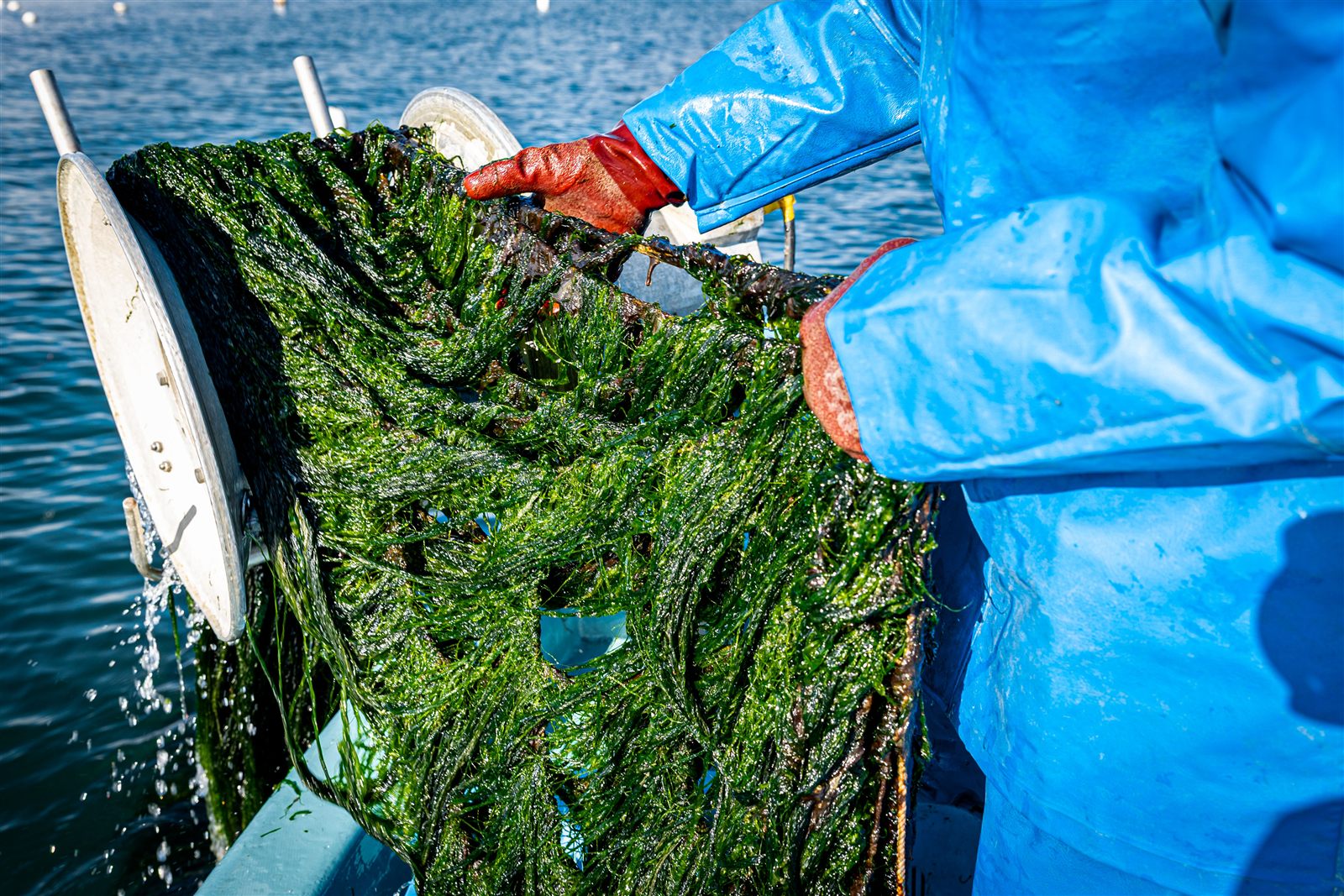
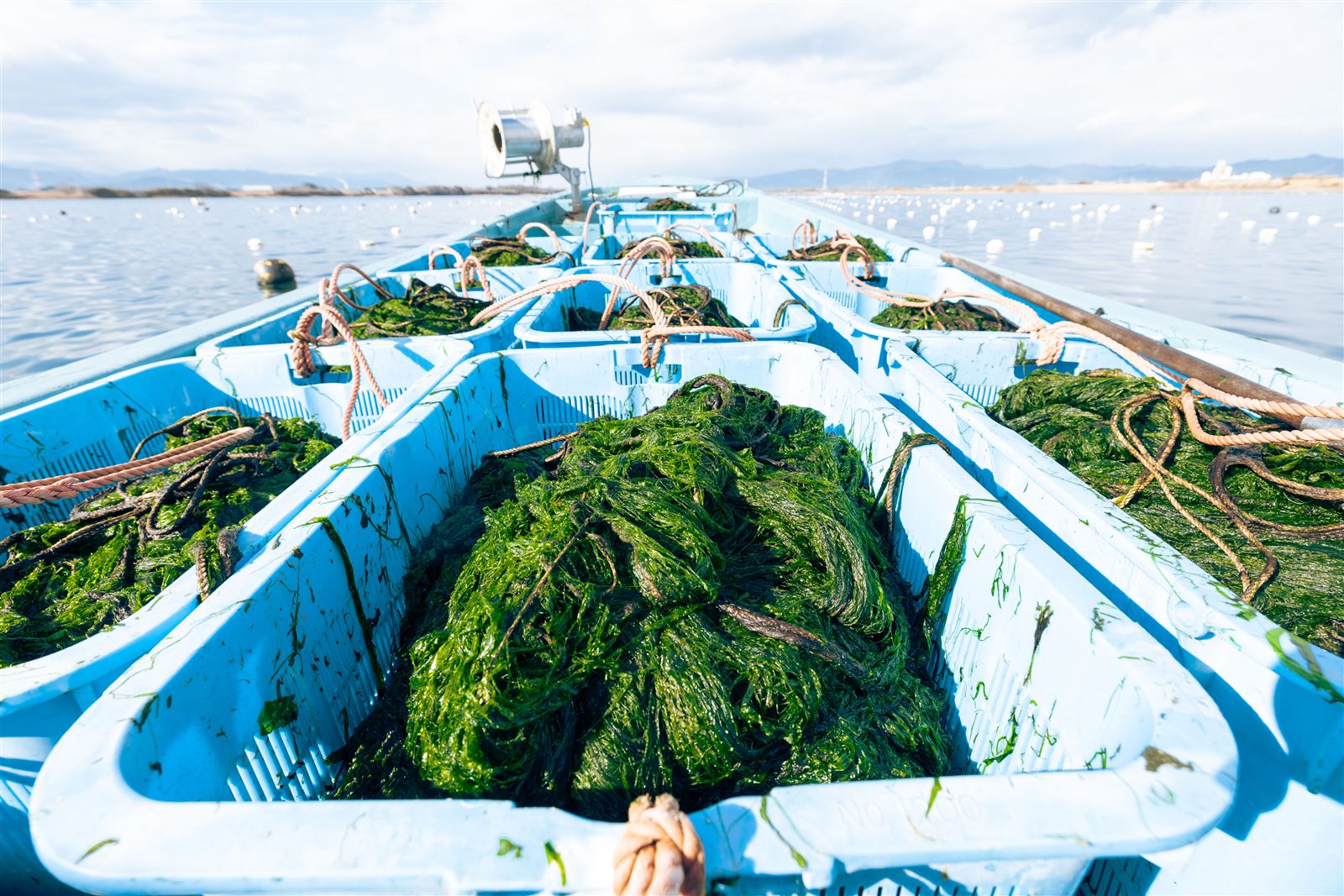
How much to bring in depends on the weather, the drying capacity and how many helpers can come that day. Timing matters: after about three days, wet seaweed turns dark when dried.
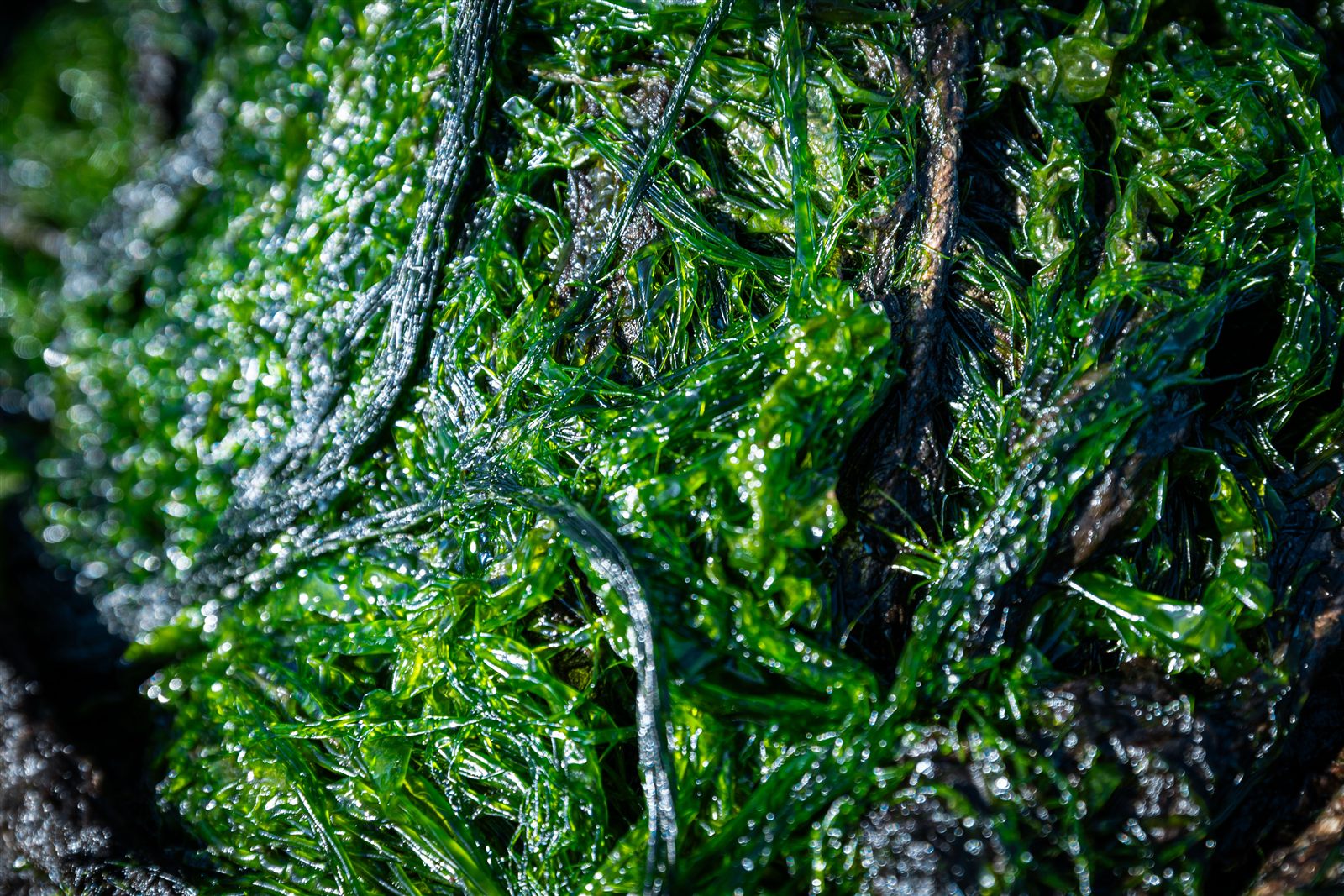
"I'm the first generation"
Most seaweed fishers inherit the work. Doi did not. When he mentions this at trade meetings, people call him an oddball. He laughs. "Everyone who gathers around me is an oddball too."
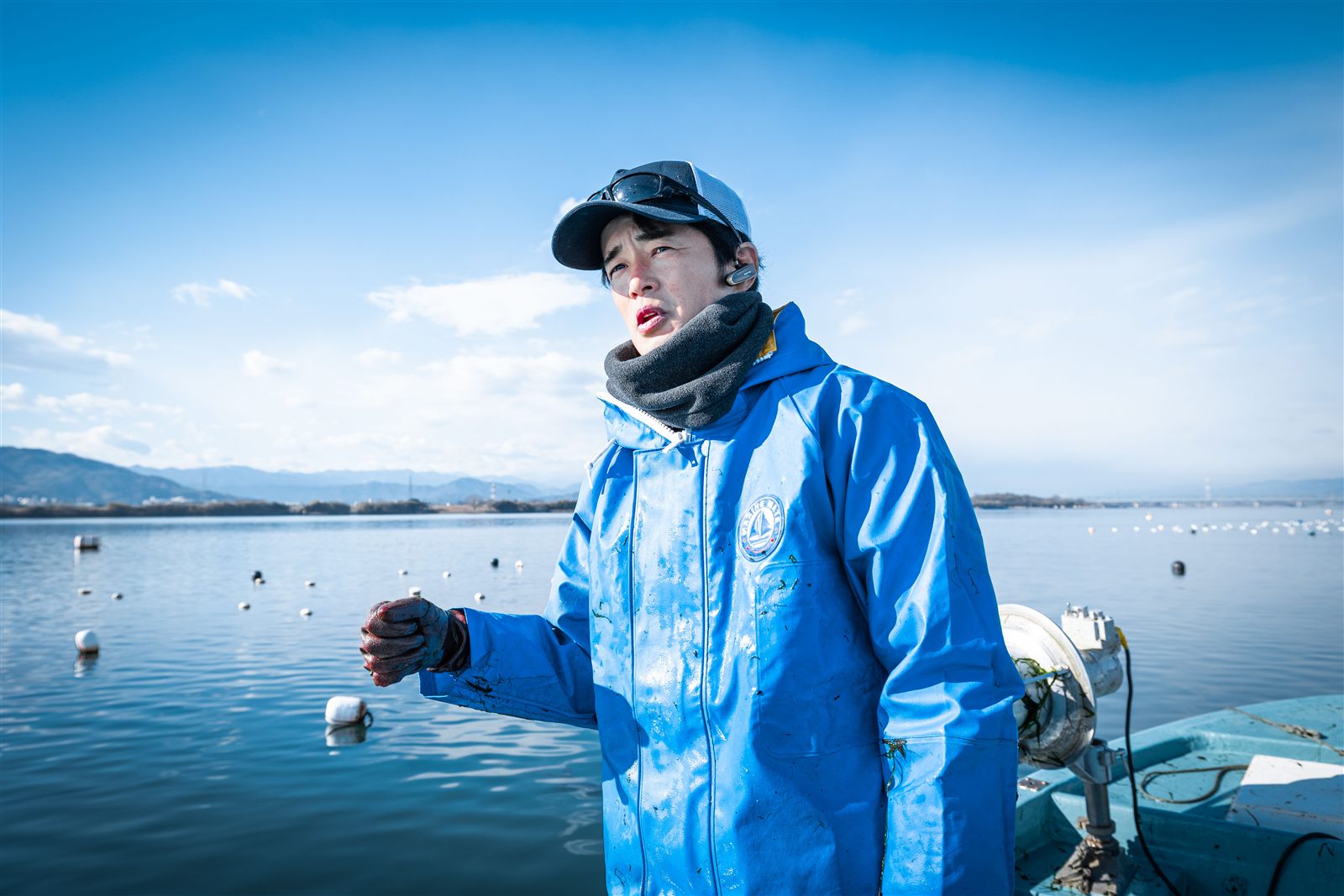
It began with a university side job. Short of money, he came home one winter and helped with black nori in Nagahara, earning a month's wages in a few days. He was hooked. He returned at every long break, finished his credits by his third year, handed in his thesis, asked his professor to let him go home, and came back only for graduation.
He kept working on the water, saved money and eventually went independent. There were five members in his cooperative's group when he joined. Today, there are two.
The day everything burned
Early on, Doi and another aonori fisher shared the cost of an old glass factory and split the space. In the first year, it burned to the ground.
A member of the volunteer fire brigade, Doi received the alert on his phone. All he could do at the scene was watch. The machines and drying trays were gone, and the old building had no fire insurance.
"For about a week, food had no taste. I'd be hungry, but it had no taste."
Meanwhile the seaweed kept growing in the river. He got through the season by paying others to dry it, then bought the land and built a new plant from scratch.
Protecting the aroma on land
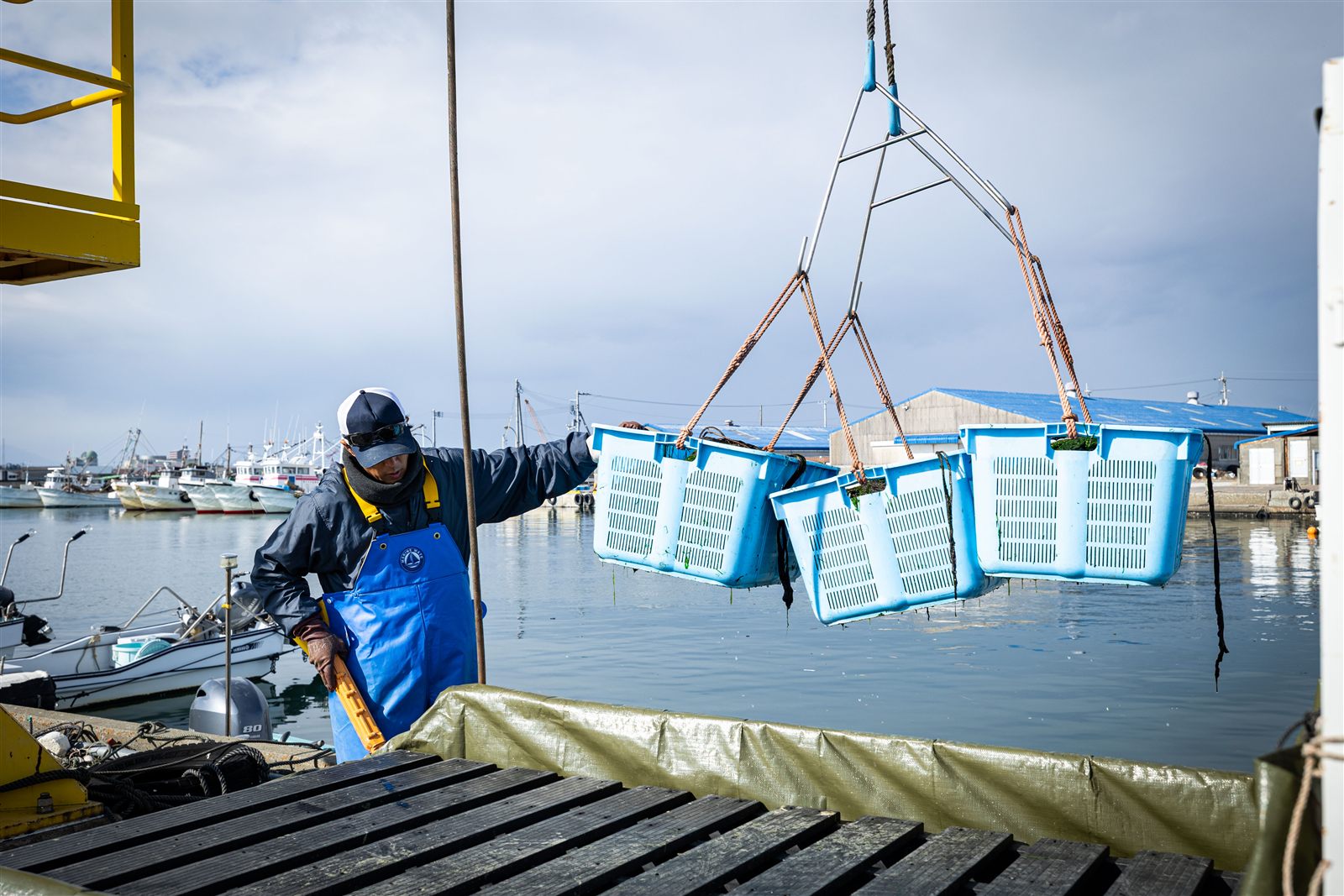
Back at the port, a yellow crane lifts the baskets ashore and a truck takes them to the plant.
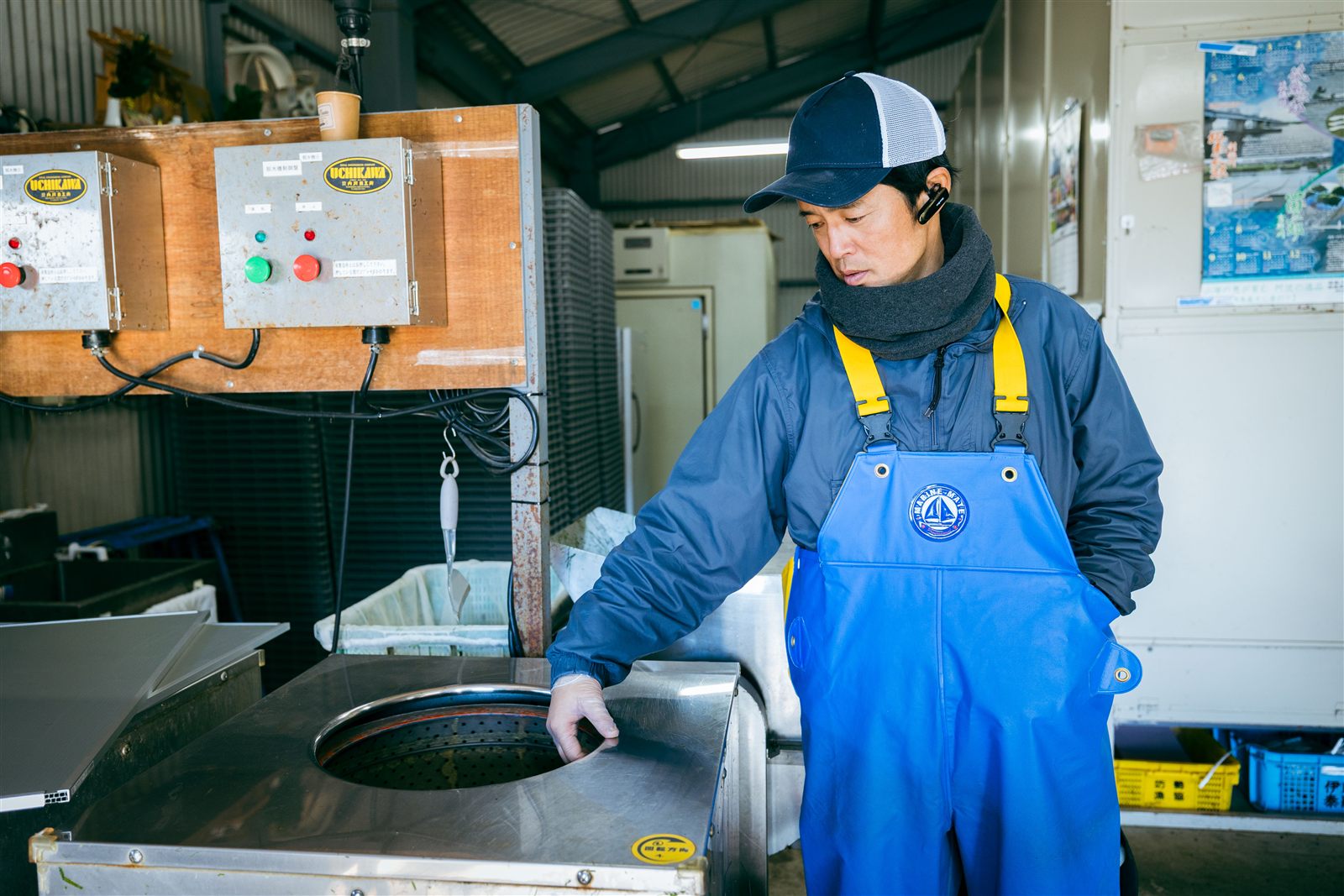
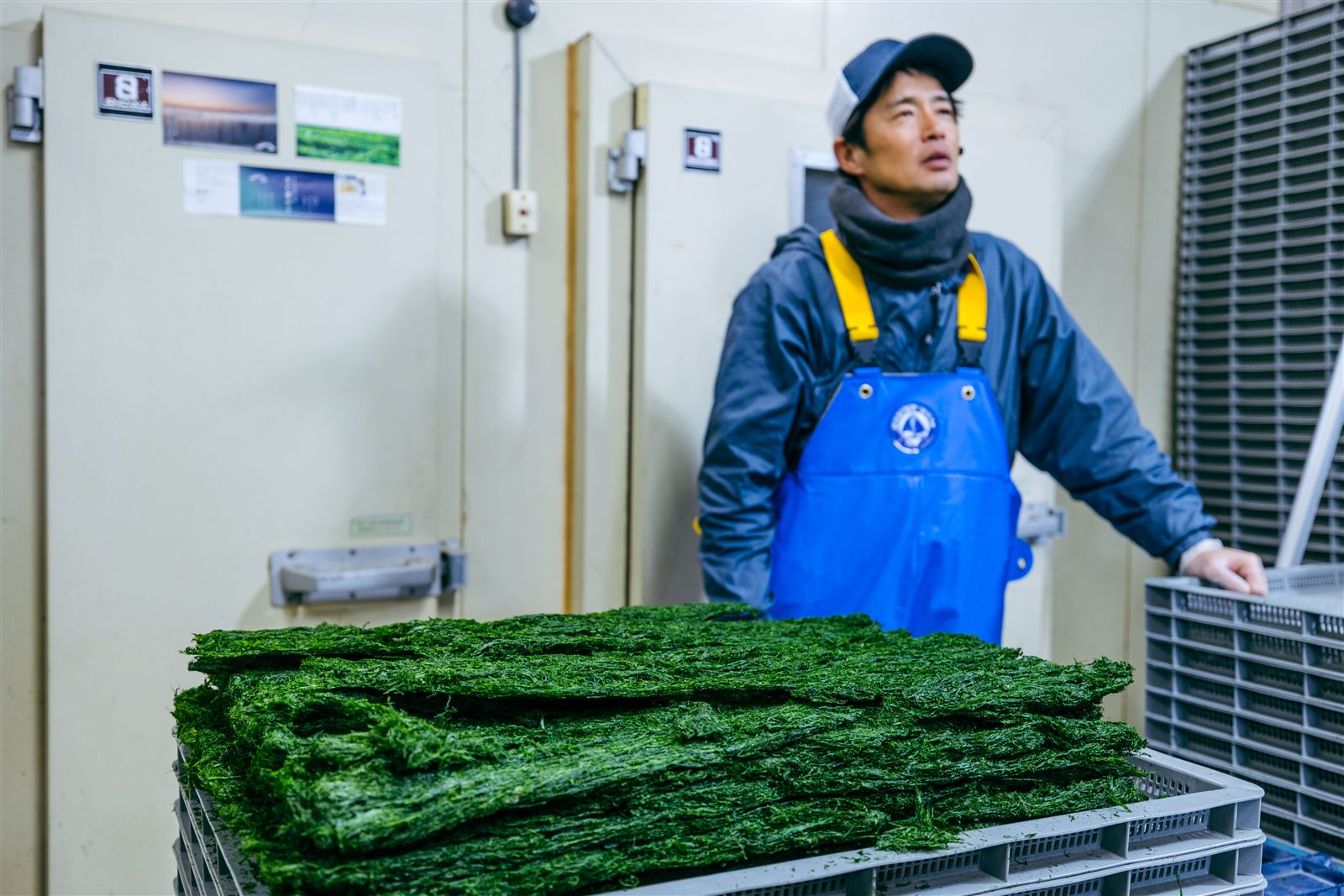
First come washing and spin-drying. The spin dryer is programmed to pulse for a second at a time, coasting between pulses until the water has drained, because full speed from the start would send the seaweed thrashing inside.
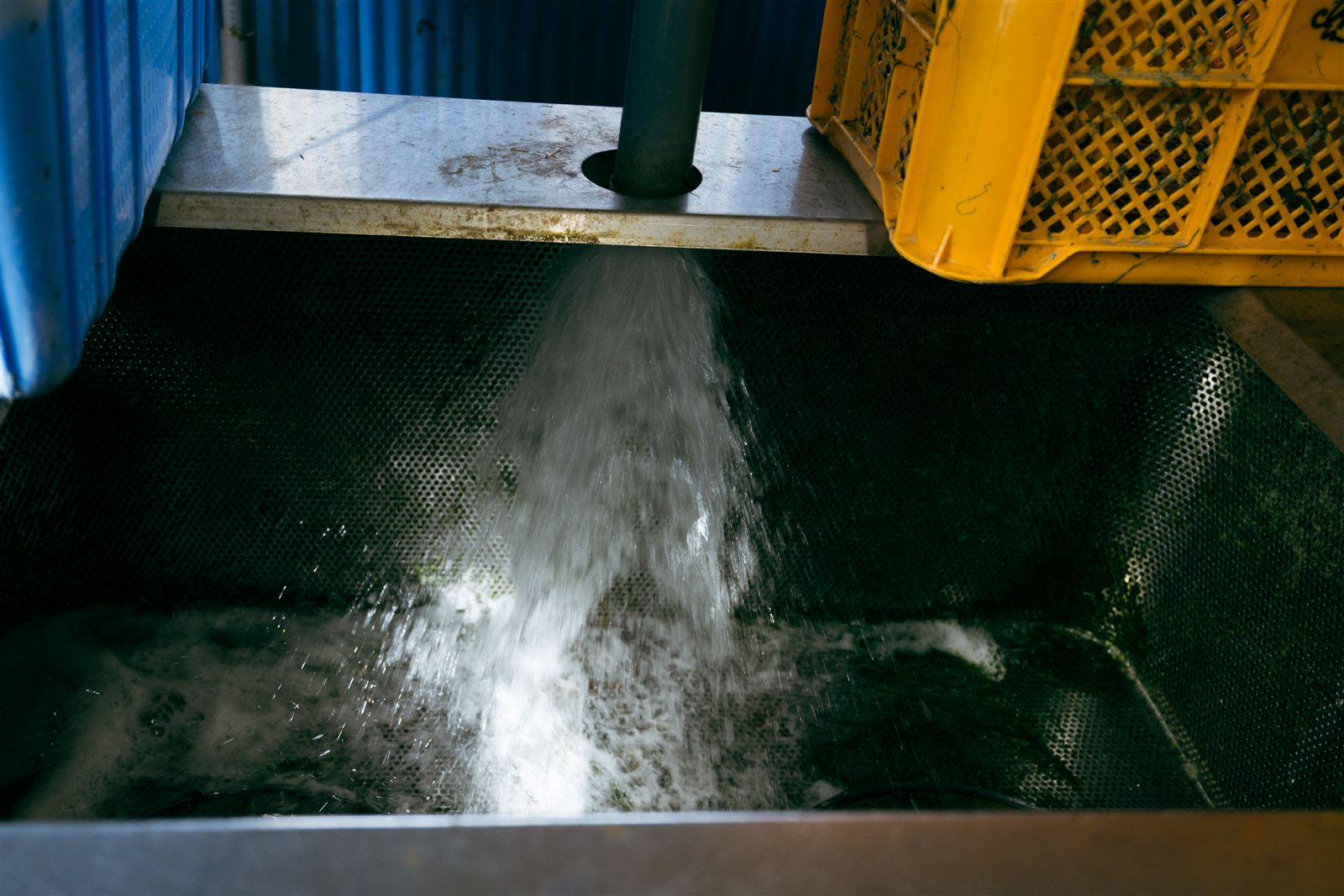
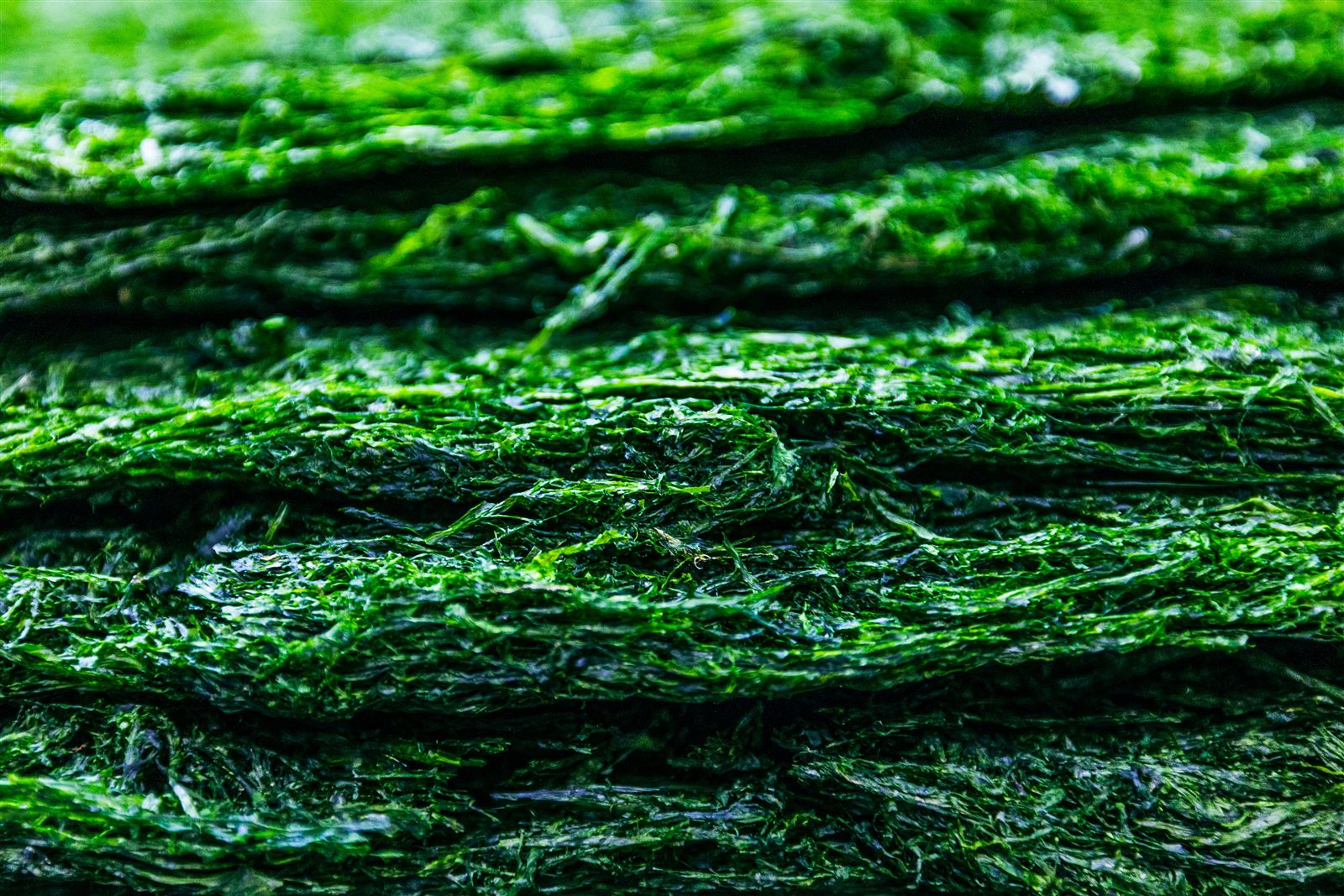
The loosened seaweed is then spread by hand on trays. About 15 part-time helpers take turns, laying it evenly to avoid overlaps, which keeps the aroma and color consistent.
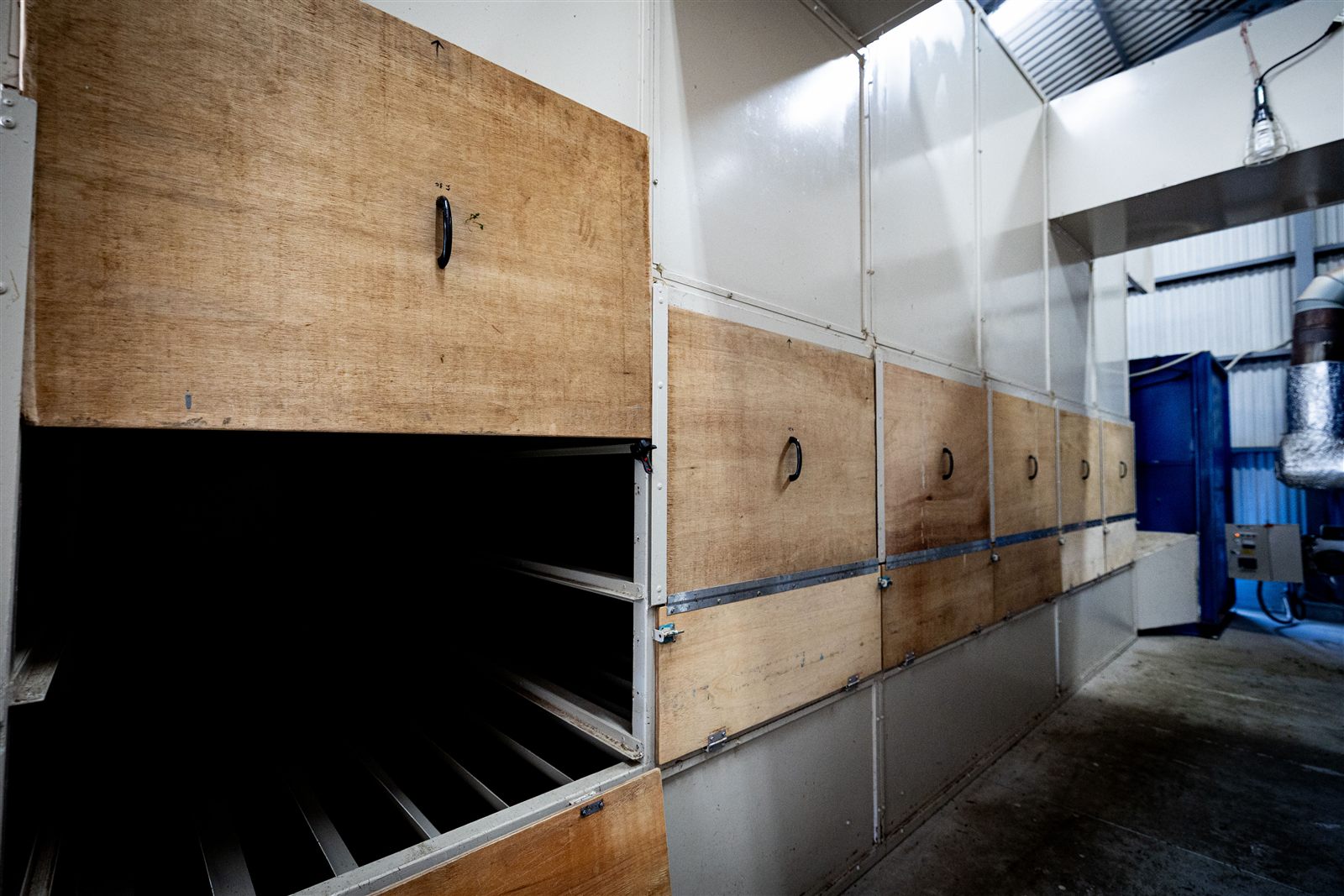
For drying, Doi uses warm air at about 45 to 55°C and cool air at about 30°C, judging the balance by feel according to how moist the seaweed is.
Worth more than the going price
For years, the Yoshino River's suji aonori all went to the fisheries federation and was sold by auction to trading companies. Doi says the river once supplied 80 to 90 percent of Japan's total. It went to confectioners, fine restaurants and food makers, so even many Tokushima residents never tasted it.
During about seven years of construction at the river mouth, harvests fell sharply and some fishers quit. The seaweed has since returned, but few people do this work.
When the all-to-auction rule loosened a few years ago, Doi began making his own products. "It wasn't the price I had in mind. I think it's worth more." But after creating a handsome package with a designer, he admits, he stopped there. "I only thought about making it, not where it would go." The designer invited him to a branding course, and that became his turning point.
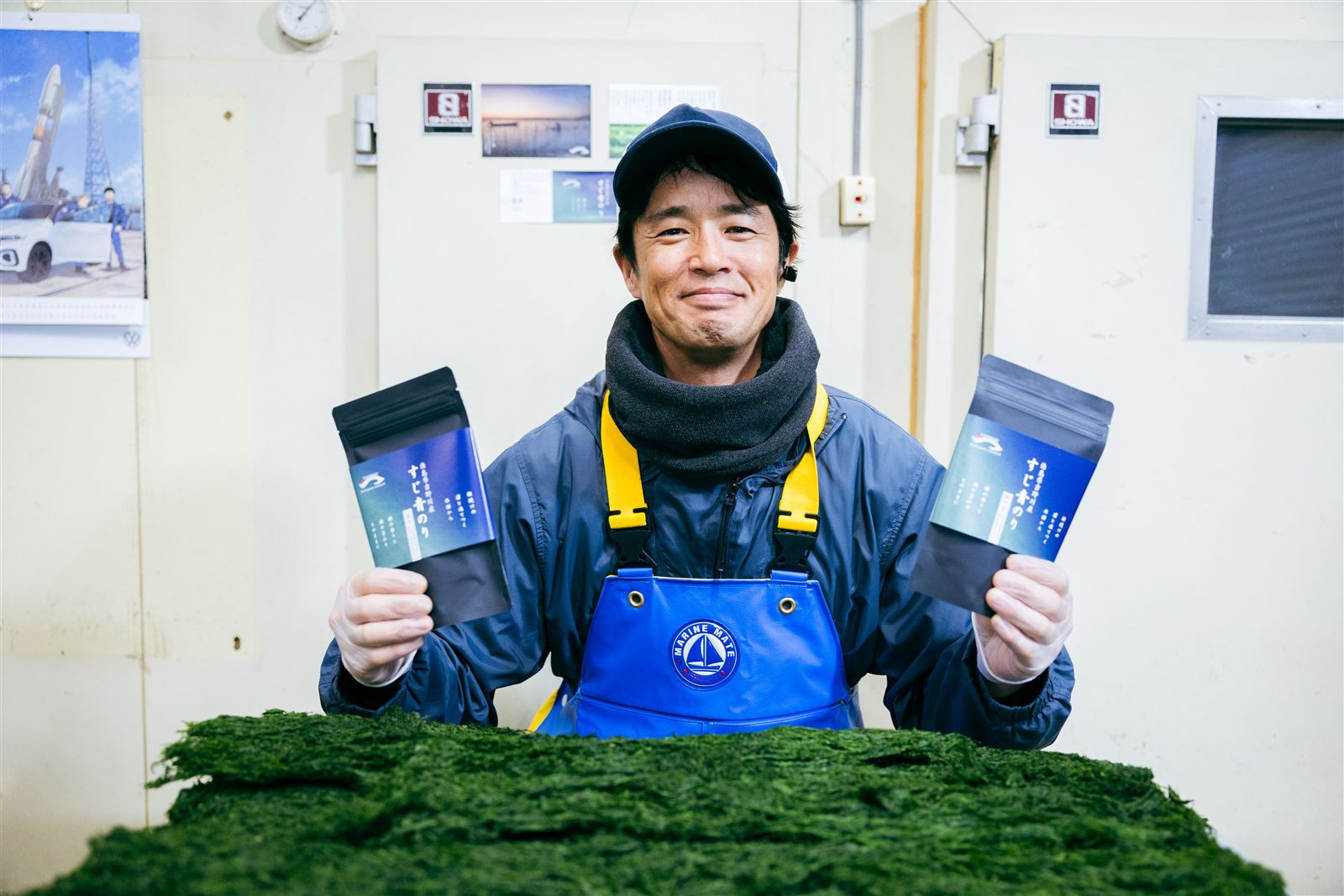
The package is an aluminized bag, because suji aonori is sensitive to light and quickly loses color in clear packaging. Doi now attends trade meetings in Japan and is looking to sell overseas too.
How to enjoy it
Start with a small pinch on its own. Then toss it with pasta, or finish fries, meat, fish, chilled tofu or salad with it. Add it to soup just before eating, since too much heat changes the aroma.
Finish an opened bag soon, but keep any extra in the freezer. With so little moisture, it will not freeze hard, and it holds its aroma and color better.
As we were leaving, someone remarked that the dried seaweed tasted even better than the fresh strands we had tried on the boat. Doi smiled. Two months of the river's gifts and one oddball's ingenuity, all in a single pinch.