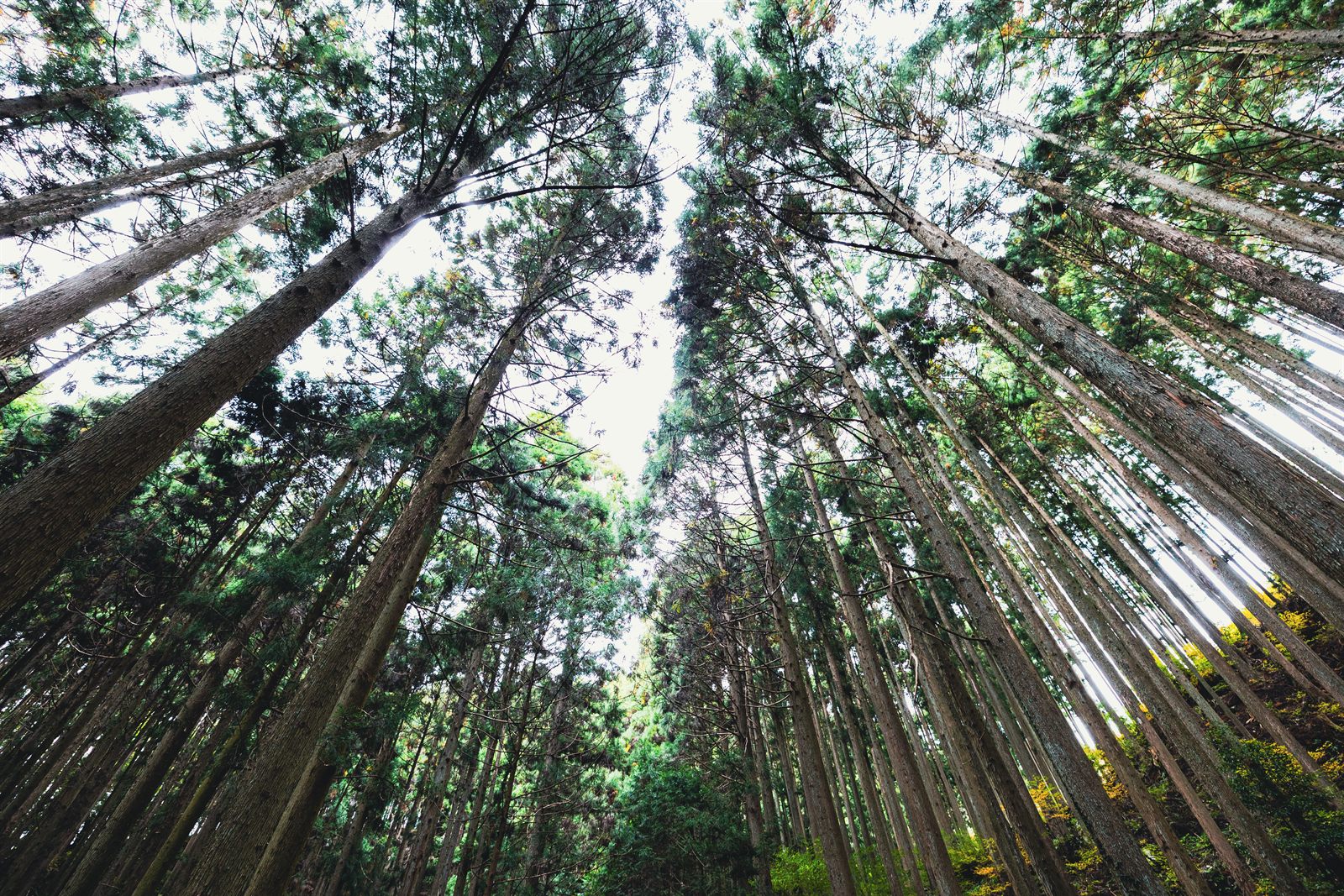
Looking up, we saw straight cedar trunks rising as far as the eye could follow. Almost nothing grew underfoot. Sunlight never reaches the ground here.
"In a cedar forest, you never have to cut the grass."
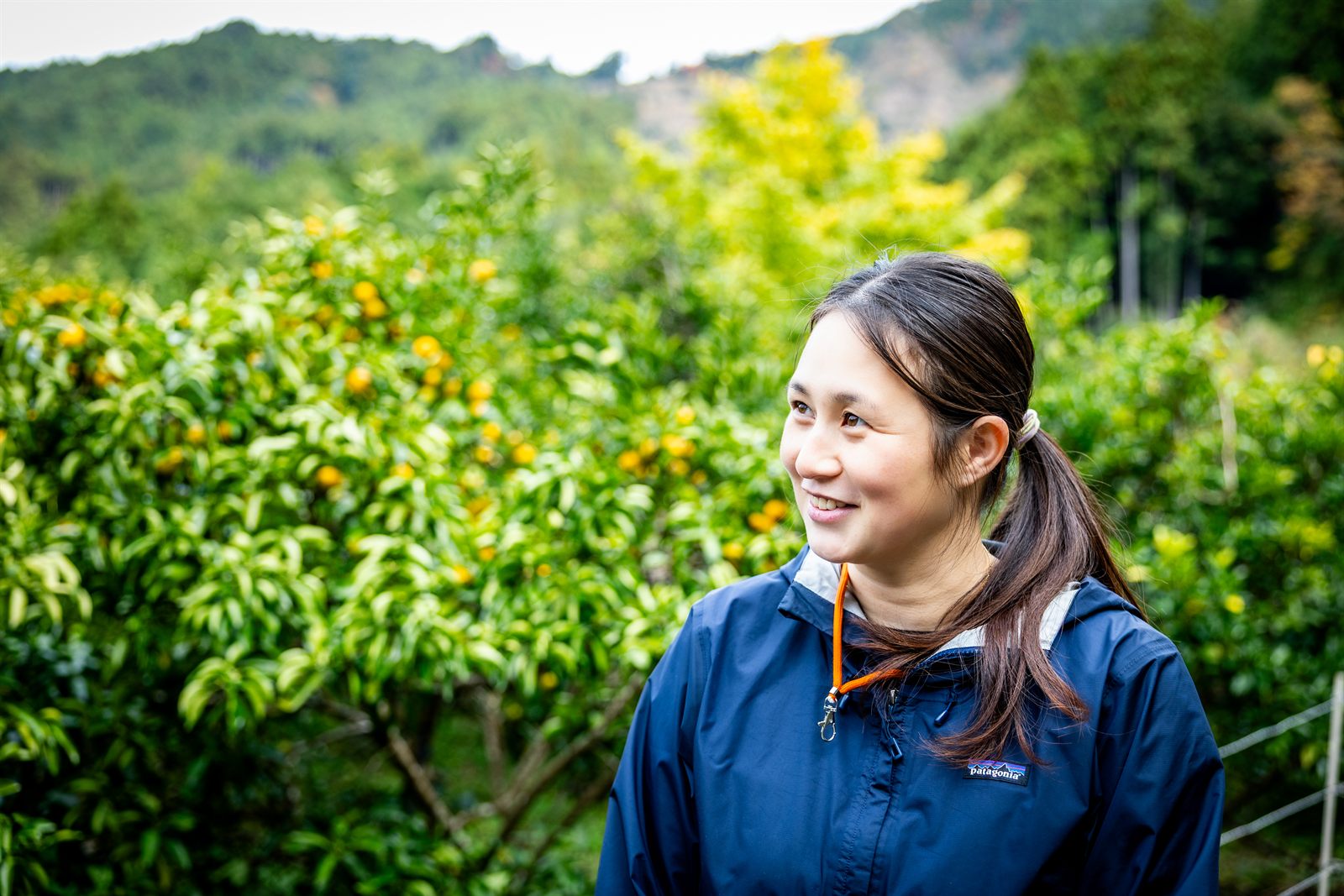
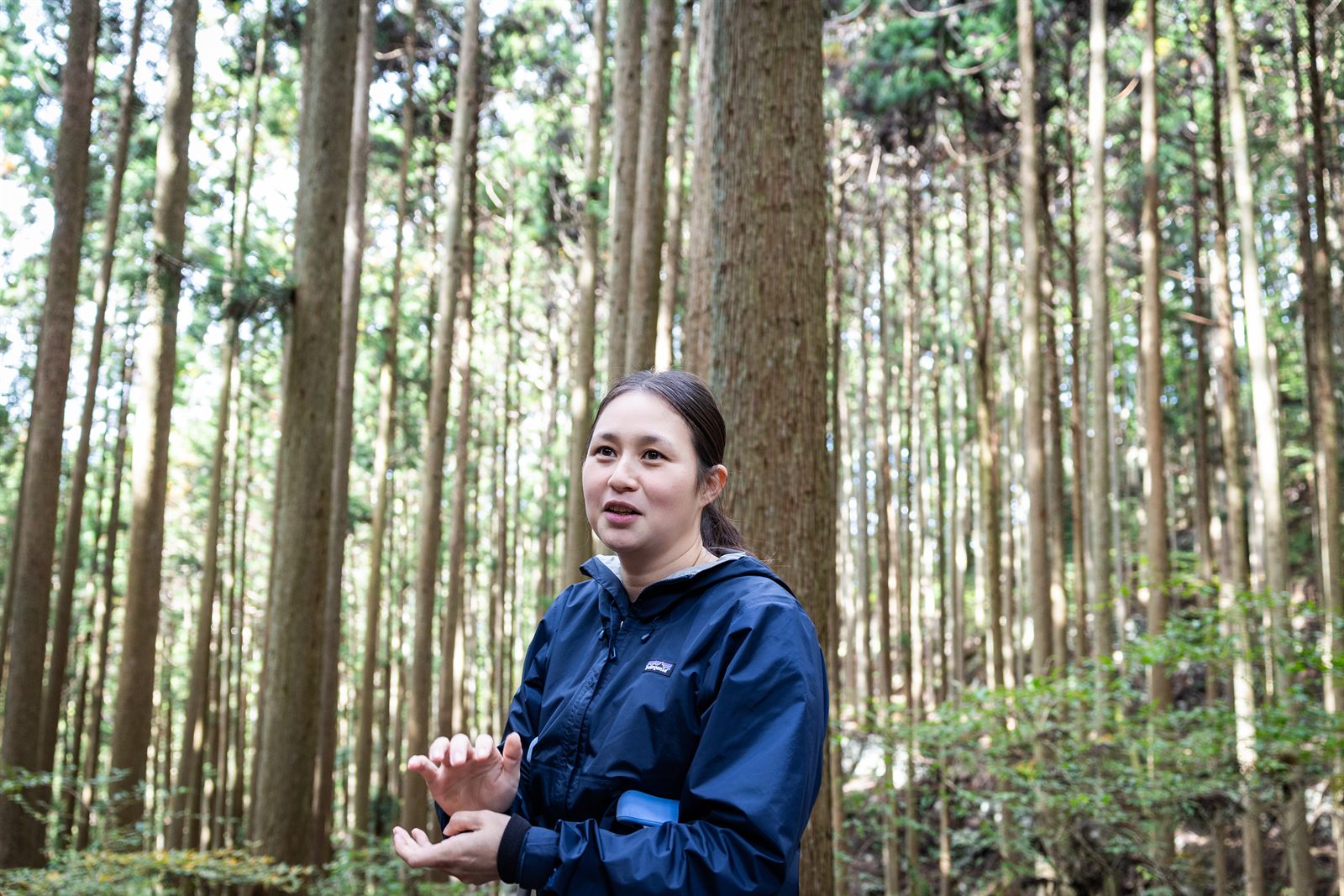
In November 2025, we visited Shishitotora, also known as Asano Farm, in the Asahi area of Kamikatsu, Tokushima. Our guide, Hidemi Asano, grows yuko, a citrus that has long been part of life in this town. The first place Asano took us was not an orchard but a mountain the family's grandparents had left behind.
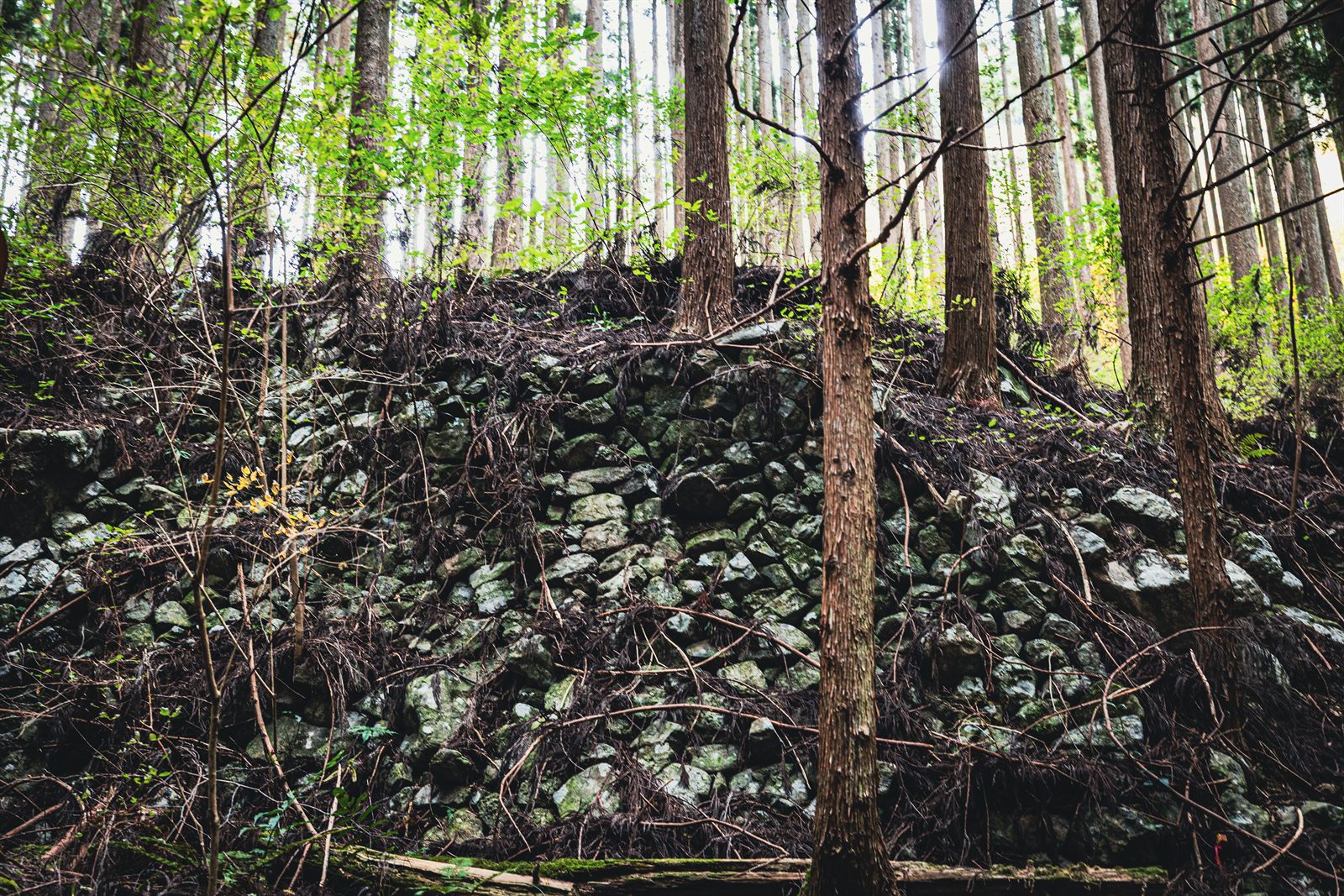
Stone terraces deep in the cedar forest
According to Asano, about 80 percent of Kamikatsu is forest, and nearly 90 percent of that is planted cedar. Along the path stood the ruins of a small hut: a charcoal kiln. Asano's grandfather was once a charcoal maker.
"Nobody makes charcoal from cedar or cypress. A charcoal hut here is proof that these slopes were never conifer forest."
Between the trees, moss-covered stone walls stepped down the slope. Until about 50 years ago, small rice terraces lined both sides of this valley. When Asano's father was in junior high school, there was a water wheel below.
During Japan's rapid economic growth, the government encouraged cedar planting, and people filled in their terraces and planted cedar one tree at a time. Forestry later declined, and of the dozens of sawmills once in town, only three remain. Unmanaged cedar with little value now covers the hills.
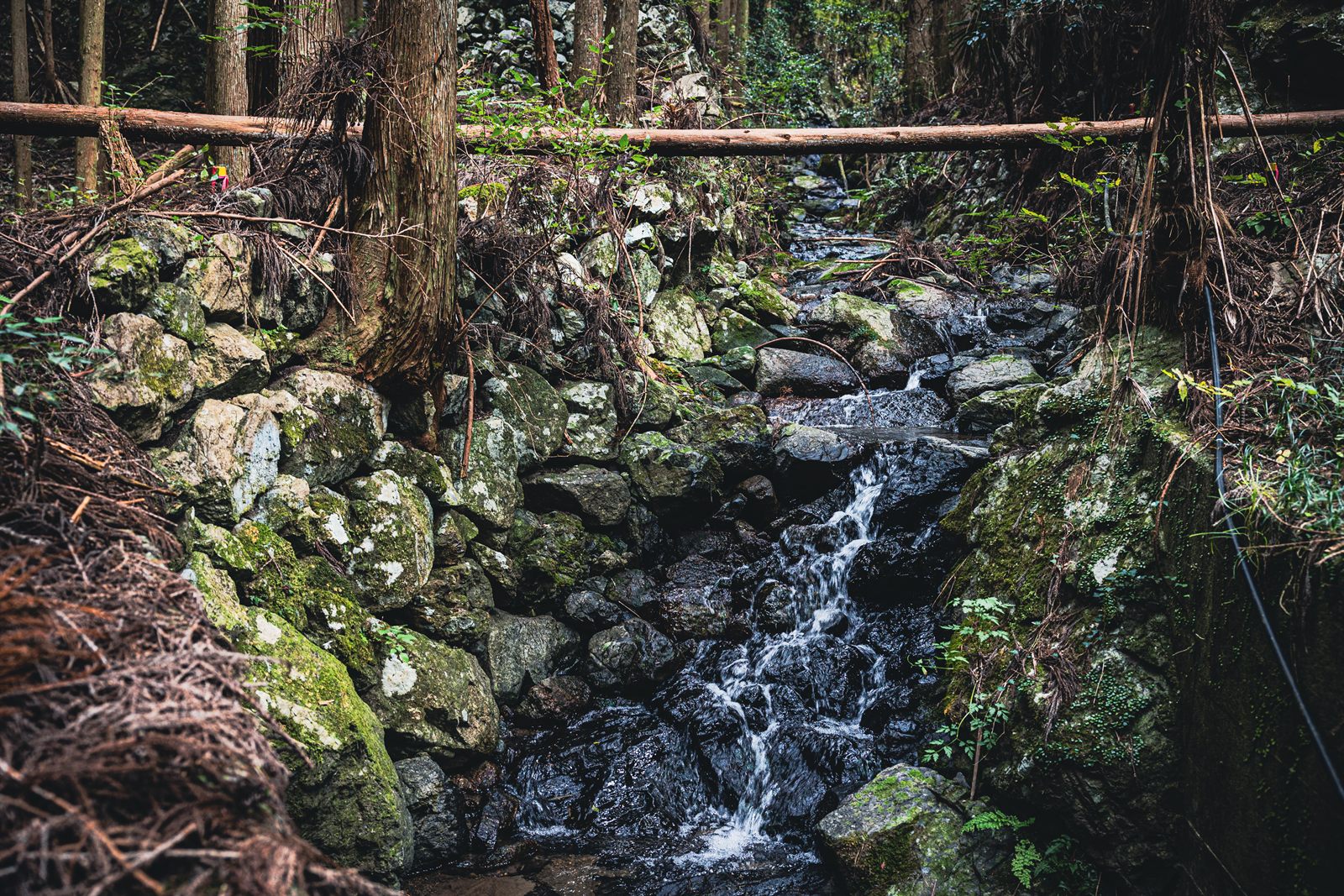
In a dark cedar forest, fallen leaves do not build up into rich soil. The ground grows thin and loses its ability to hold water, so rain rushes straight off the slopes. Irrigation channels that villagers once maintained together fall apart once the rice fields are gone.
"Everything that can go wrong in a depopulated mountain area is packed into this one place."
Nutrients from the mountains flow down rivers to the sea. Changing how people farm in the mountains, Asano has come to feel, is about more than one's own fields.
Yuko and acorn trees where cedar once stood
On land inherited from their grandparents, Asano is having the cedar cut. At first the local forestry cooperative said it could not be done. Repeated requests went nowhere. Just as Asano was ready to give up, a logger's truck appeared on a mountain road. The logger was looking for broadleaf timber, had just started a company in Anan, and said, "We can cut it."
"I only knew about the cooperative. It made me feel that the more people you meet, the better."
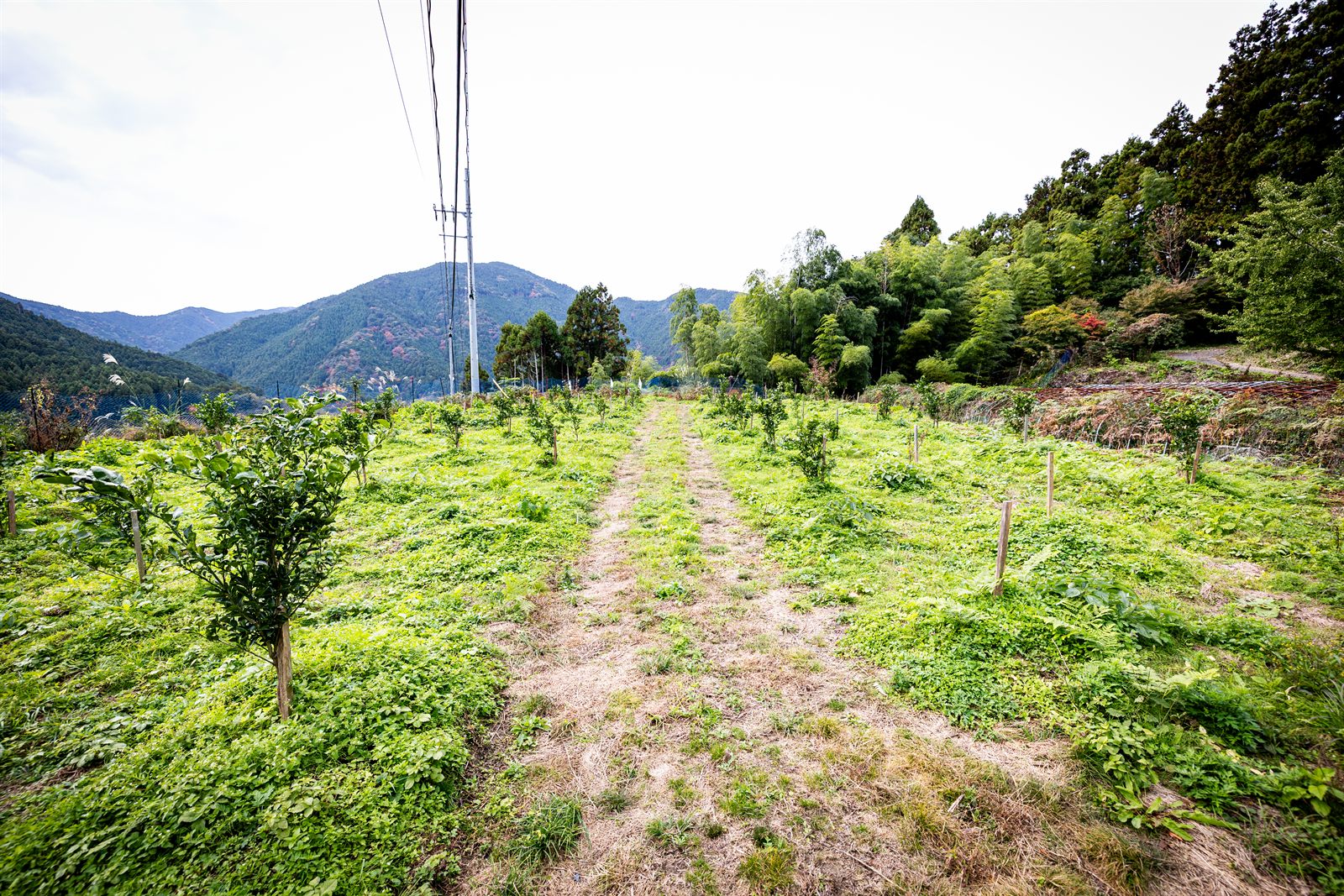
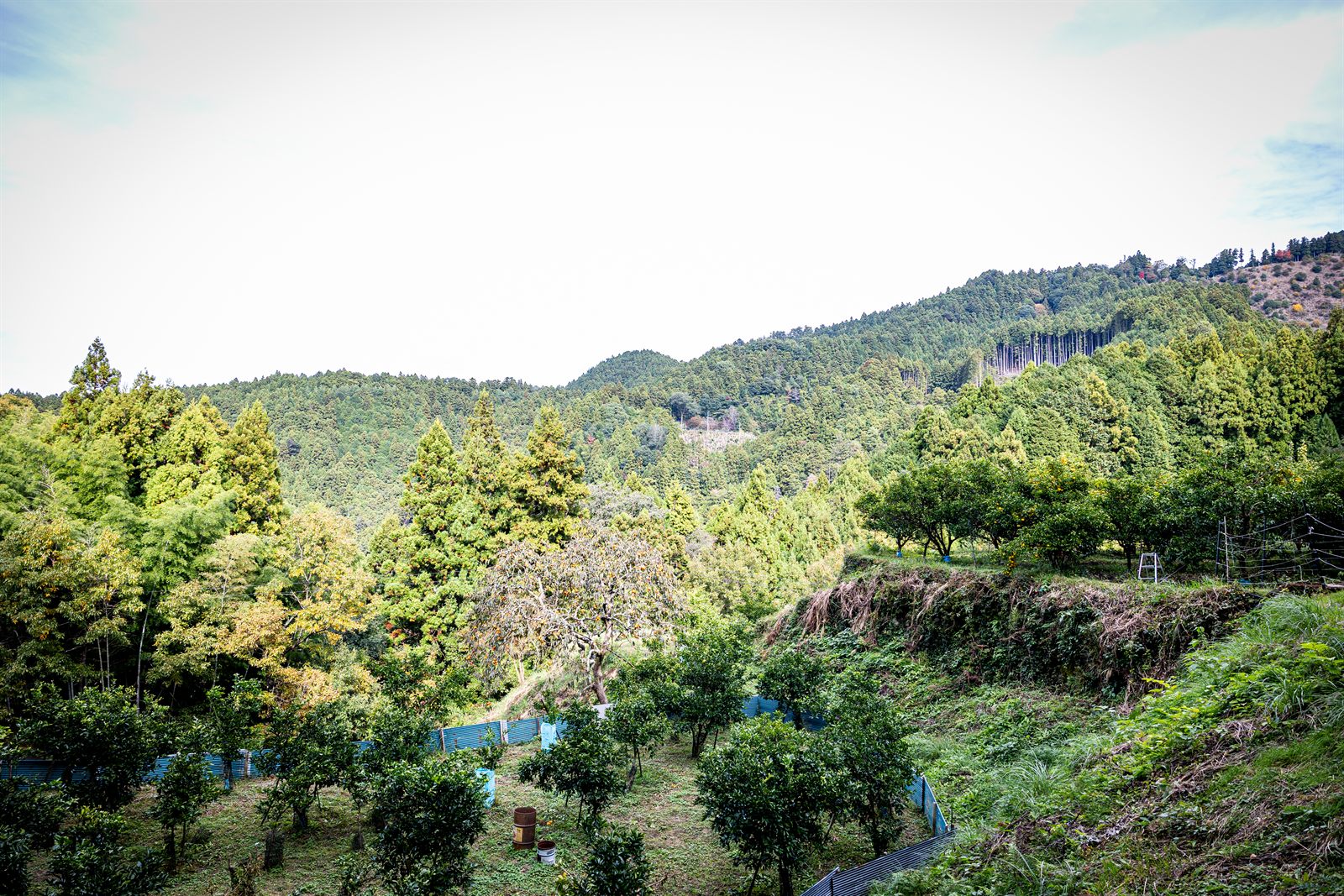
Part of the cleared land became a yuko orchard, designed so a light truck can reach the back and the trees can be tended with as few hands as possible.
On another slope, Asano planted about 2,300 saplings of sawtooth oak and konara oak. The subsidy program recommended low-pollen cedar, but Asano's answer was, "Please, no more cedar." The choice went to trees that drop acorns. On the next mountain to be cut, Asano hopes to plant many wild cherry trees, which seed themselves and bring birds such as white-eyes.
"There may be no one to take over this mountain after me. So I want to make a satoyama where the earth can make things better on its own."
A bayberry tree a grandmother remembered
Asano's grandmother spent the last ten years of a long life, into the 90s, in a care home. Dementia had set in, and on some days the grandchild went unrecognized. One day came a remark that the wild bayberries must be delicious right now. Asano was sure there were no bayberry trees on the family land, and mentioned it to their father. "No, there was one," he said.
When he was in junior high school, a large bayberry tree stood across from the rice field, and neighborhood children always gathered to eat its fruit. When Asano and their father went to look, a huge broken stump was still there.
"The landscape you remember at the end of your life is the place you lived when you were young. I want to be that kind of person, and to be in that kind of place."
This year, Asano ordered bayberry saplings. It is one small step toward bringing that landscape back.
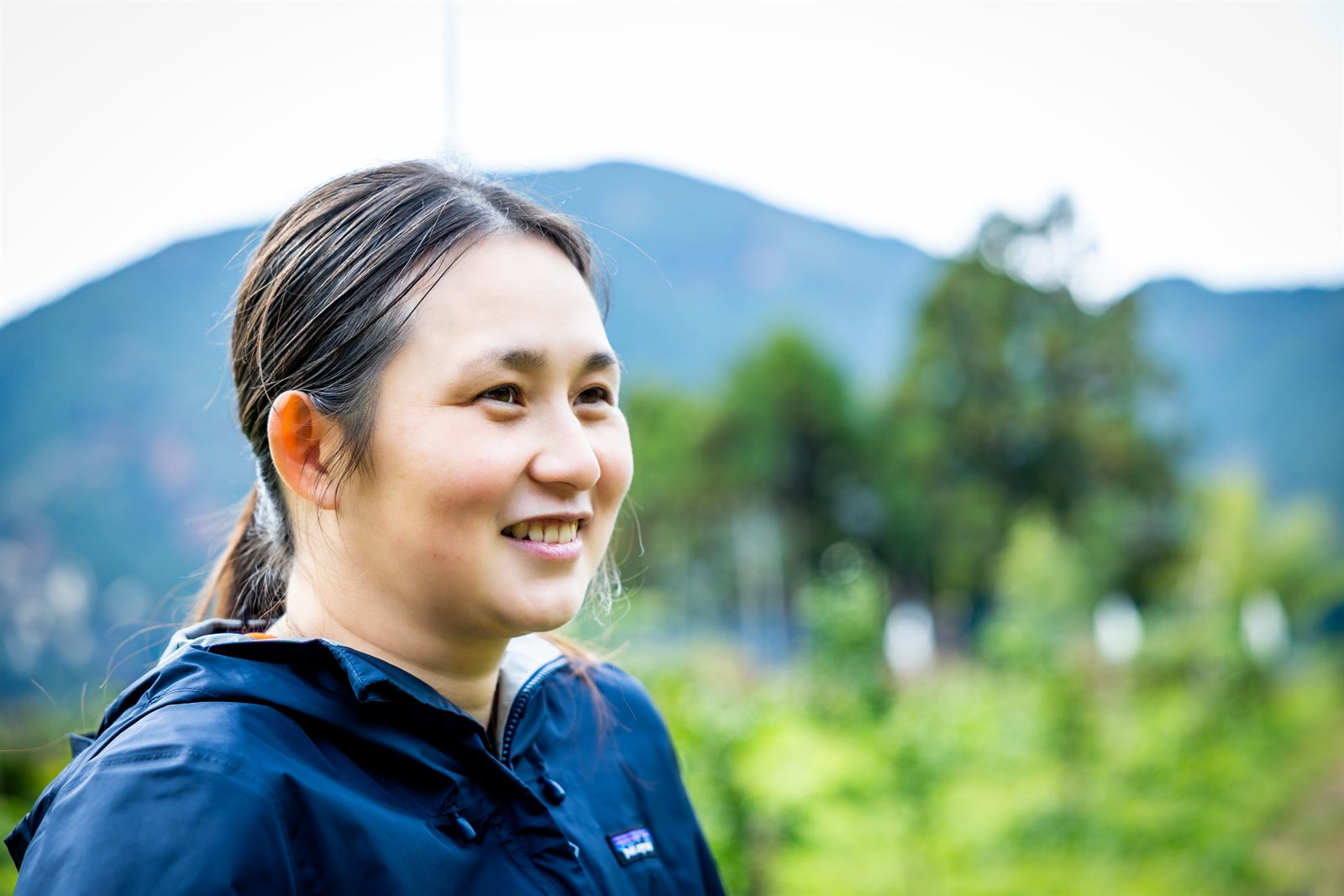
From Kyoto back to the grandparents' land
Asano was born and raised in Tokushima City. Kamikatsu was their father's hometown, the countryside home the family returned to for rice planting and harvest, New Year and Obon.
Asano went to university in Kyoto, then spent three years in French dining service at a hotel and fell in love with wine and sake. After that came about four years at a law office, and a feeling of being worn down. "I couldn't breathe in the concrete jungle." Time on the grandparents' farm, Asano realized, had shaped them deeply.
Back in Tokushima, at a barbecue a cousin had invited them to, Asano met their future spouse, who works at the Kamikatsu town office. The proposal came from Asano.
"We need it for our own house"
After marrying, while looking for a job in the city, Asano visited the grandparents' land for the first time in a while. Sudachi trees were heavy with fruit, left unpicked. It seemed a waste, so Asano harvested sudachi, yuzu and yuko and shipped them for processing. That was the beginning.
The surprise was the price of yuko. It was so low that Asano considered cutting the yuko trees and replanting yuzu. But why had the grandparents planted so many? Neighbors had yuko trees too. When Asano told other farmers how cheap it was, they laughed: of course it is. So why grow it? Asano asked the older people nearby, and the answer was always the same.
"They said, 'We need it for our own house.' Whatever's left over goes to the co-op."
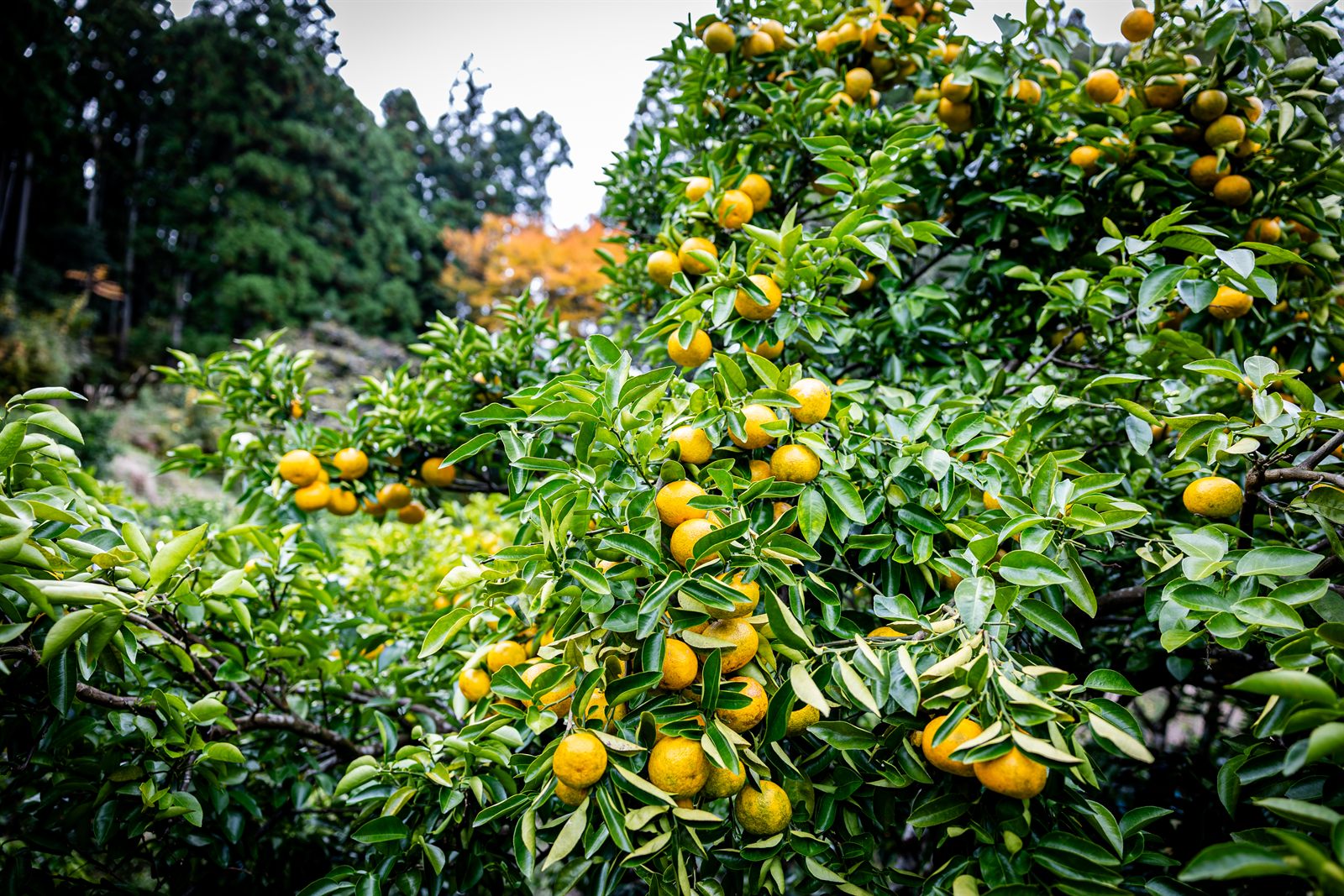
Yuko was grown for home use, not for sale. The trees have no thorns, so the fruit is easy to pick, and it tastes good. At the grandparents' house, yuko vinegar went generously into kakimaze, a local scattered sushi, and into miso dressings. Asano realized that this food culture exists nowhere else.
The trees also bear fruit with little care. No one Asano asked sprayed them. Yuko is said to be a natural cross between yuzu and daidai, a bitter orange. The oldest known record dates to the Edo period, and nothing earlier is known. A local saying goes, "Yuzu for aroma, sudachi for acidity, yuko for flavor," and its harvest is only about 1 percent of yuzu's.
"I thought, what a lovable citrus. And I thought, if things stay like this, it will disappear."
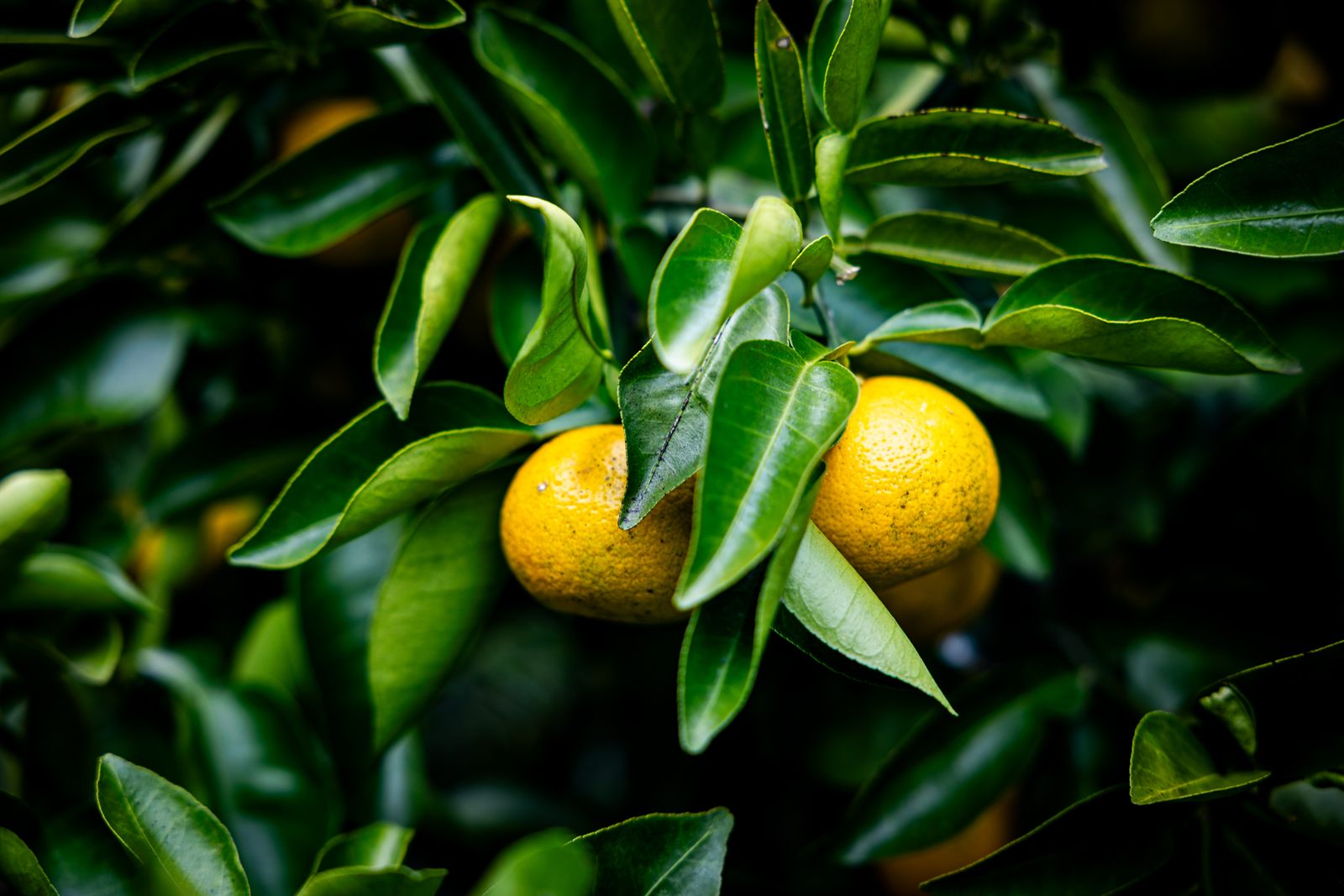
In 2021, Asano took over the land from the grandparents and named the farm Shishitotora, after a beloved grandfather, Ihei, and grandmother, Torano.
which supplies garnishes to restaurants, and grows lotus leaves and flowers in the rice paddies. With that as a base, the work of growing yuko continues.Ripe yuko for professional kitchens
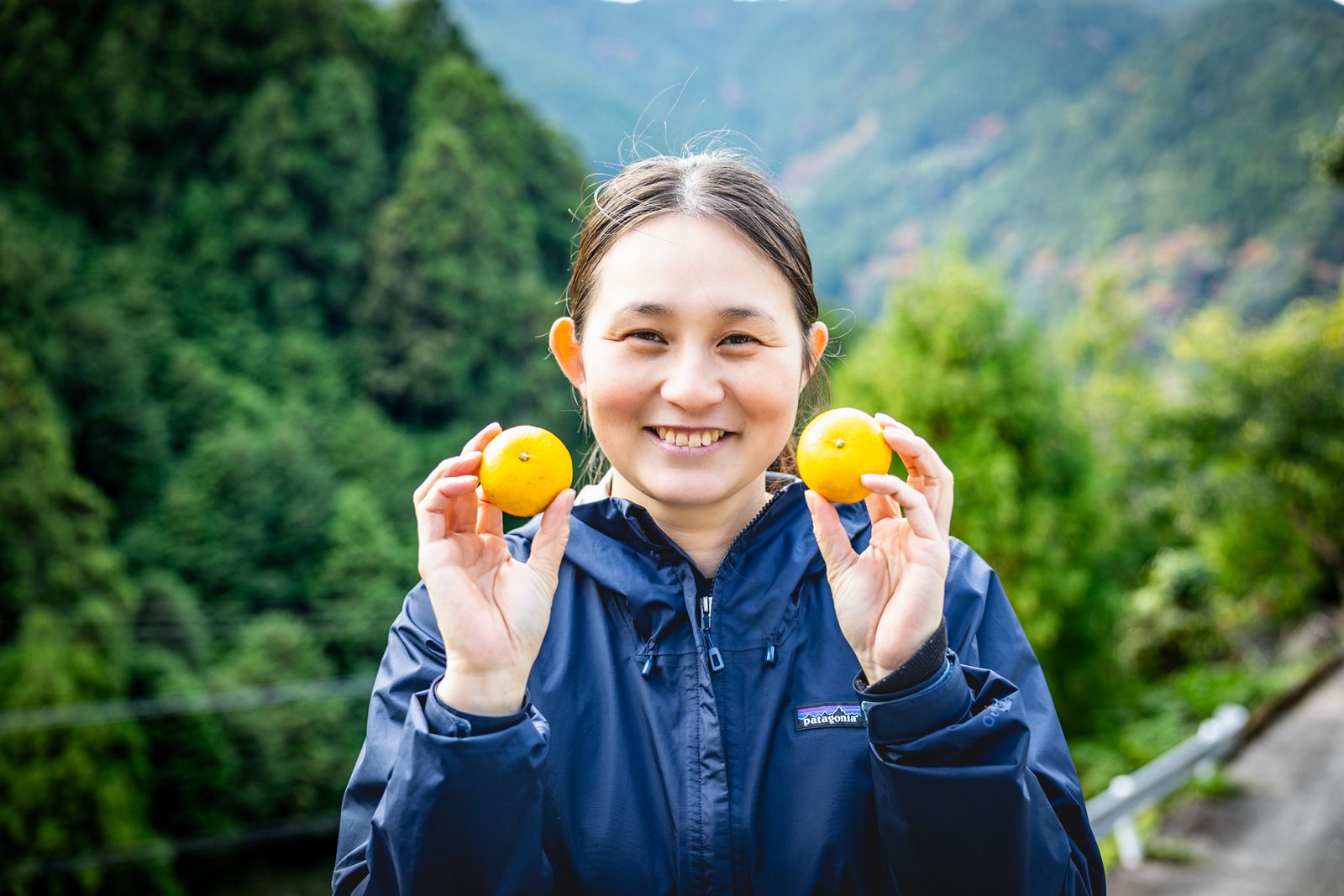
Yuko has usually been picked green around October and pressed for juice for ponzu and similar products. But older generations knew how good the fruit is once it ripens, on the tree or after picking. Asano focuses on fully ripe, yellow yuko. The ripe harvest lasts less than a month, from mid-November to early December.
Tomoji Yokoishi of Irodori, the company behind the leaf business, also saw promise in ripe yuko. He kept saying, "After leaves, it's yuko." A pamphlet carrying those words still hangs in Asano's workroom.
Because nearly all yuko has been pressed for juice, few people in Tokushima have ever seen the whole fruit. Some call it a phantom fruit.
Asano wants to sell it fresh. The farm has made unheated 100 percent yuko juice and a confiture of only yuko and sugar, but there is a limit to what one person can do.
"Hand good fruit to professionals like restaurants and pastry chefs, let them make it even better, and have them bring it to many people. That's the best way to get it out there, and it's what a farmer is really for."
Grown without pesticides during cultivation, the fruit can be used whole, skin and all. The skin is thin and easy to work with. In 2025, Asano showed yuko at a trade show in the Tokushima Prefecture booth. According to Asano, it was the first time yuko had ever been exhibited.
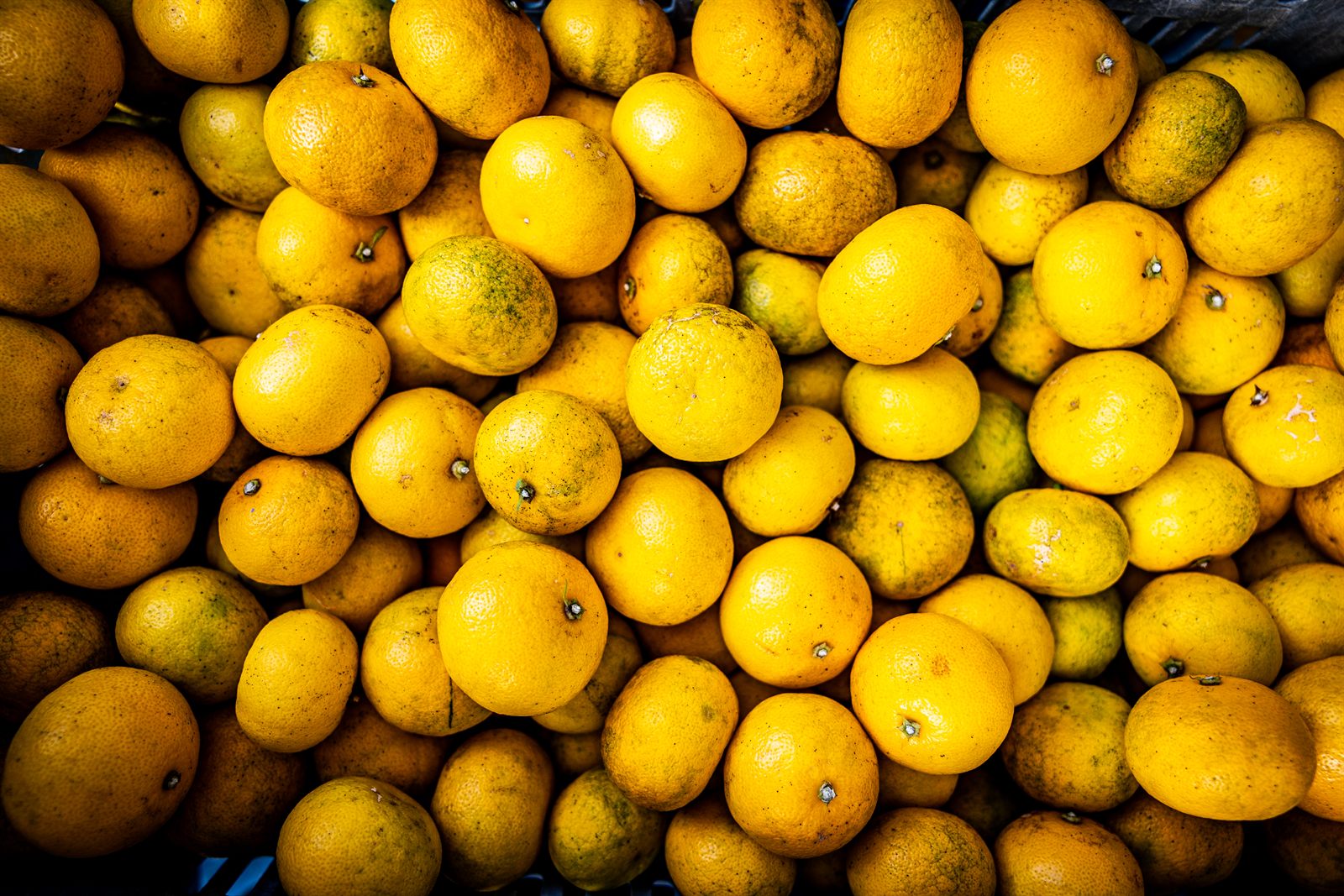
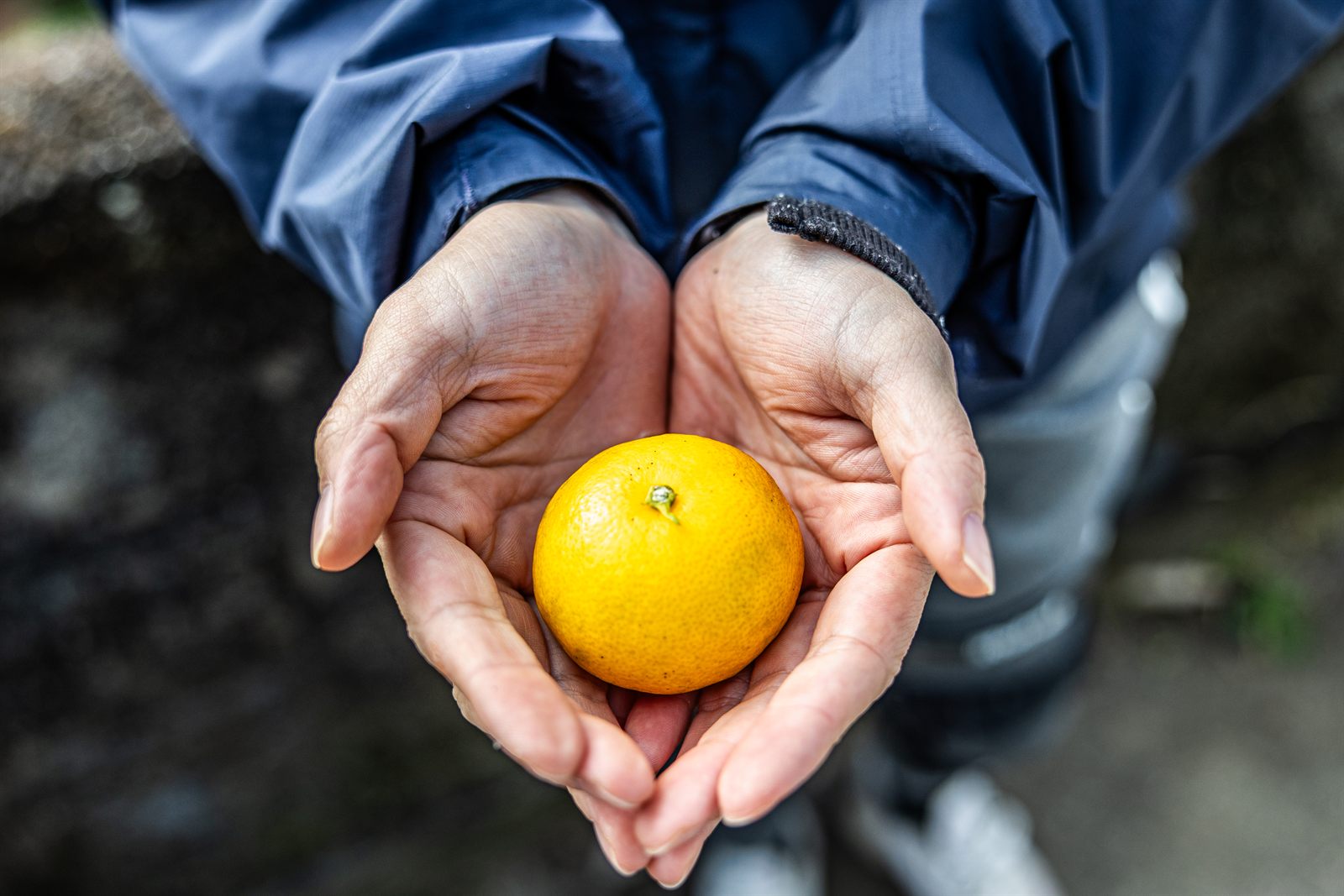
Yuko until spring
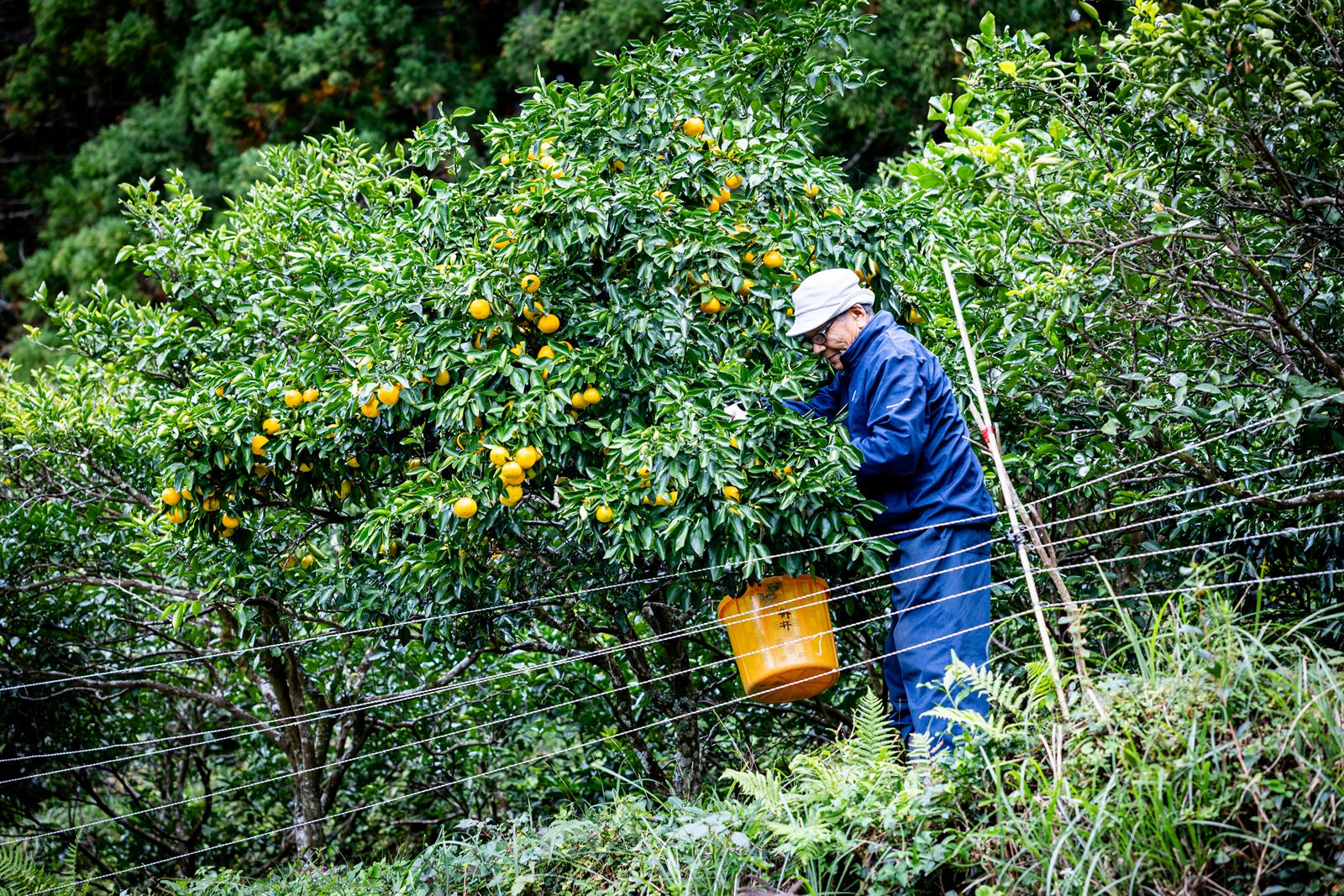
The challenges are clear. Most yuko growers are in their late 70s or 80s, and Asano expects production to drop sharply within ten years. One 81-year-old grower said harvesting was no longer possible, so Asano now buys the entire crop and picks it together with the grower.
"If even a few people think yuko can make money, successors will come."
Asano wants to build a system that can pay growers a good price, and to work with universities and companies to bring in help during the busy harvest. Rather than trying to grow the population, the key, in Asano's view, is gathering hands for the busiest weeks.
Another goal is a large cold-storage room. The farm's prefab refrigerator holds only a few hundred kilograms, but with space for about three tons, Asano could ship fresh yuko until spring.
The idea comes from the grandparents' generation. In the days when sweets were scarce, people kept yuko buried in rice husks until spring and ate it in April, in the middle of the busy planting season. It was a refreshing treat.
Passing on the food culture matters too. From 2026, kakimaze sushi made with yuko will be served at school in Kamikatsu. Third graders have already visited the orchard to learn about yuko. One day Asano hopes children from nursery school through junior high will help with the harvest, so that kids growing up in Kamikatsu can get to know their native citrus.